Location:
ChenDianHu Industrial Area, GanZhe Town, Minhou County,
Fuzhou City, Fujian Province, China
teruiermirror
A Mirror Sells Faster When It Gives the Room a Quiet Upgrade Signal
26-06-03 130 view
A lot of customers do not want the room to look completely different They want it to look clearly better. Not dramatic.Not designer-heavy.Not like they started over. Just upgraded. That is why a one-piece room upgrade mirror story works so well in a community home store. Because many customers are not asking: “What big design move should I make here?” They are asking: What mirror gives this room a clear upgrade signal without turning the room into a whole new project? That is one of the clearest real buying moods in the whole mirror category. A quiet upgrade signal is often stronger than a loud style move That is the right way to think about it. A lot of customers do not want a mirror that dominates the room.They want a mirror that changes the room’s reading. They want the room to feel: more intentional more finished less builder basic more everyday elevated more like someone made one better decision here That is where mirrors become powerful. A good mirror can: upgrade the wall upgrade the furniture below it upgrade the room’s overall read make the space feel more together create a visible room shift without asking the customer to explain a stronger style choice That is exactly why this section works. Customers often know they want “better” before they know what kind of better they can live with This is what makes the category commercially strong. They say things like: “I want the room to feel nicer.” “It still feels too plain.” “I want one better wall move.” “I want it to look upgraded, but not overdone.” “The room needs something that makes it feel more finished.” That is where a strong mirror section can help. It gives the customer a product answer to a very common home problem: How do I make the room feel upgraded without making it feel like I am now committed to a whole style overhaul? That is exactly the kind of question community retail should solve well. A mirror sells especially well here because it sends an upgrade signal fast That is the real value. A lot of upgrades are slow and expensive to feel: new furniture wall paint layered décor art groupings bigger styling plans A mirror can do something better. It can: create one stronger wall answer make the room look more intentional add reflection, shape, and polish together help the space feel more curated give the customer visible payoff with one purchase That is why this category is so strong. Customers do not always need a room transformation.Very often they need a room signal that says: this space has moved up a level. Why this kind of section works especially…
A Mirror Sells Faster When It Gives the Room a Quiet Upgrade Signal
A Mirror Sells Faster When It Gives the Room a Quiet Upgrade Signal
A lot of customers do not want the room to look completely different
They want it to look clearly better.
Not dramatic. Not designer-heavy. Not like they started over.
Just upgraded.
That is why a one-piece room upgrade mirror story works so well in a community home store.
Because many customers are not asking:
“What big design move should I make here?”
They are asking: What mirror gives this room a clear upgrade signal without turning the room into a whole new project?
That is one of the clearest real buying moods in the whole mirror category.
A quiet upgrade signal is often stronger than a loud style move
That is the right way to think about it.
A lot of customers do not want a mirror that dominates the room. They want a mirror that changes the room’s reading.
They want the room to feel:
more intentional
more finished
less builder basic
more everyday elevated
more like someone made one better decision here
That is where mirrors become powerful.
A good mirror can:
upgrade the wall
upgrade the furniture below it
upgrade the room’s overall read
make the space feel more together
create a visible room shift without asking the customer to explain a stronger style choice
That is exactly why this section works.
Customers often know they want “better” before they know what kind of better they can live with
This is what makes the category commercially strong.
They say things like:
“I want the room to feel nicer.”
“It still feels too plain.”
“I want one better wall move.”
“I want it to look upgraded, but not overdone.”
“The room needs something that makes it feel more finished.”
That is where a strong mirror section can help.
It gives the customer a product answer to a very common home problem: How do I make the room feel upgraded without making it feel like I am now committed to a whole style overhaul?
That is exactly the kind of question community retail should solve well.
A mirror sells especially well here because it sends an upgrade signal fast
That is the real value.
A lot of upgrades are slow and expensive to feel:
new furniture
wall paint
layered décor
art groupings
bigger styling plans
A mirror can do something better.
It can:
create one stronger wall answer
make the room look more intentional
add reflection, shape, and polish together
help the space feel more curated
give the customer visible payoff with one purchase
That is why this category is so strong.
Customers do not always need a room transformation. Very often they need a room signal that says: this space has moved up a level.
Why this kind of section works especially well in community home stores
Because neighborhood-store customers often buy for rooms that are:
mostly fine
mostly furnished
mostly usable
still missing one stronger visual decision
They are buying for:
entries
dressers
sideboards
bedroom walls
living room walls
hallways
everyday rooms that need one better layer, not a full redesign
They are not always trying to build a new identity for the room.
They are often trying to create: a room that reads more upgraded without reading more difficult.
That is why this section matters.
It tells the customer: These are the mirrors that make the room feel better, more finished, and more intentional without making the upgrade feel loud, risky, or overcommitted.
That is a strong promise.
The best quiet-upgrade mirrors usually feel broad, polished, and easy to trust
This is not usually the strongest zone for very dramatic, very ornate, or very novelty-driven mirrors.
A strong mirror in this section usually needs:
a clear silhouette
enough presence to change the room
enough restraint to stay easy
broad room compatibility
enough polish to feel worth buying
enough flexibility to work with what the customer already owns
That is the balance.
The mirror should clearly improve the room. But it should still feel like something the customer can place with confidence.
That is what keeps the sale easy.
What mirror types usually work best when the customer wants a quiet upgrade signal
1. Medium wall mirrors
These are often the backbone of the whole section.
Why they work:
easy to place
large enough to visibly improve the wall
not so large that they become risky
strong above consoles, dressers, sideboards, benches, and calmer blank walls
they feel like a real upgrade, not a filler move
A medium wall mirror often sells well here because it gives the room a stronger finish without forcing a stronger identity shift.
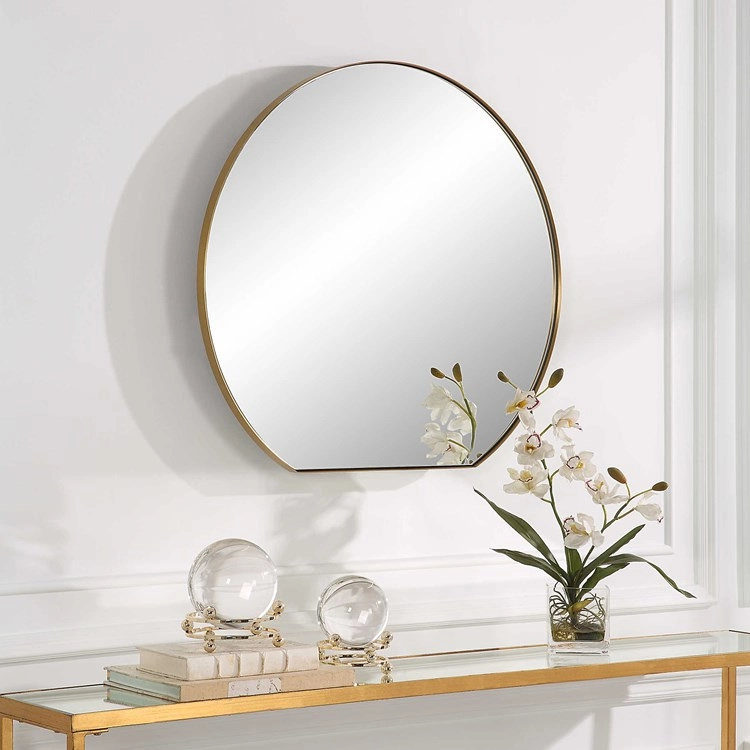
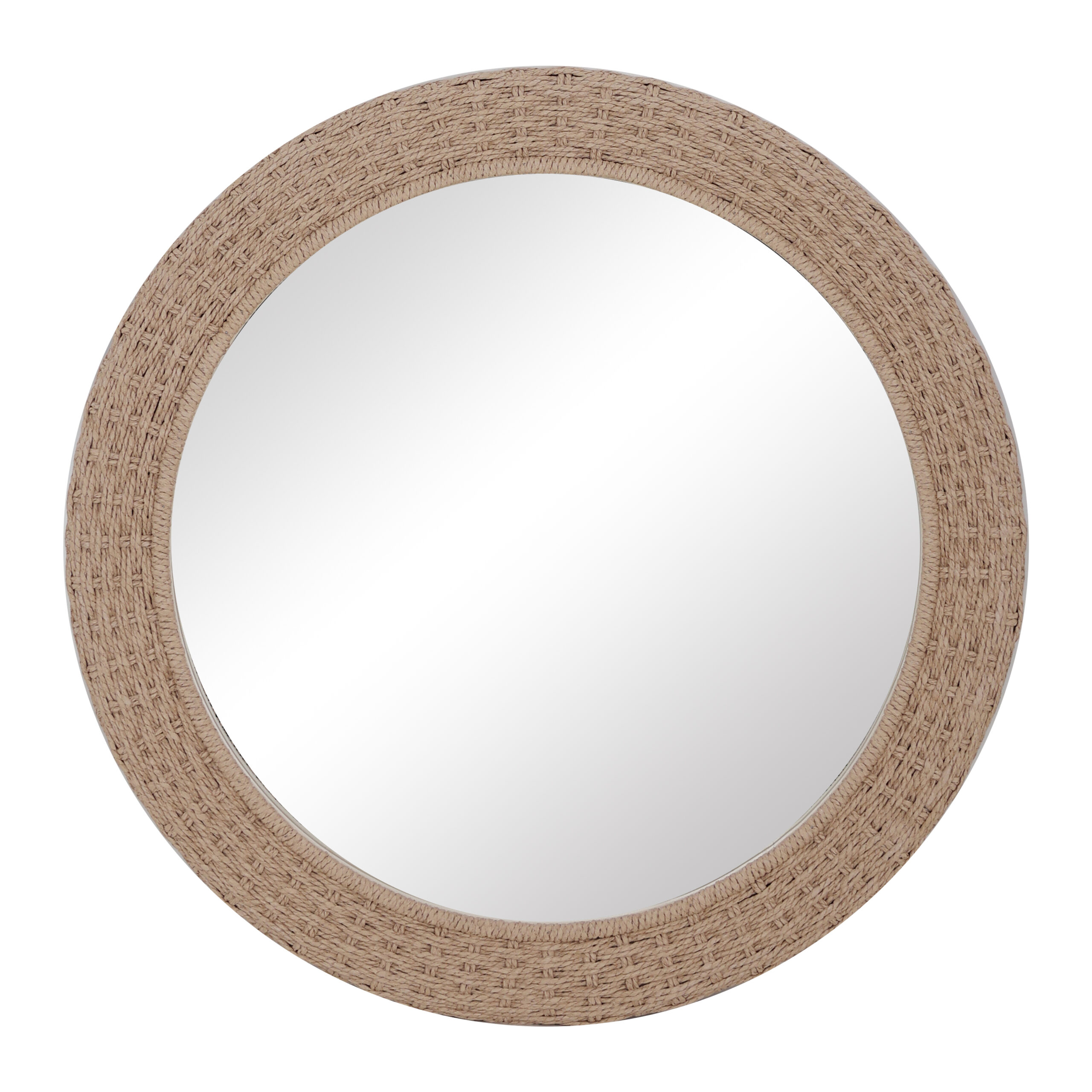
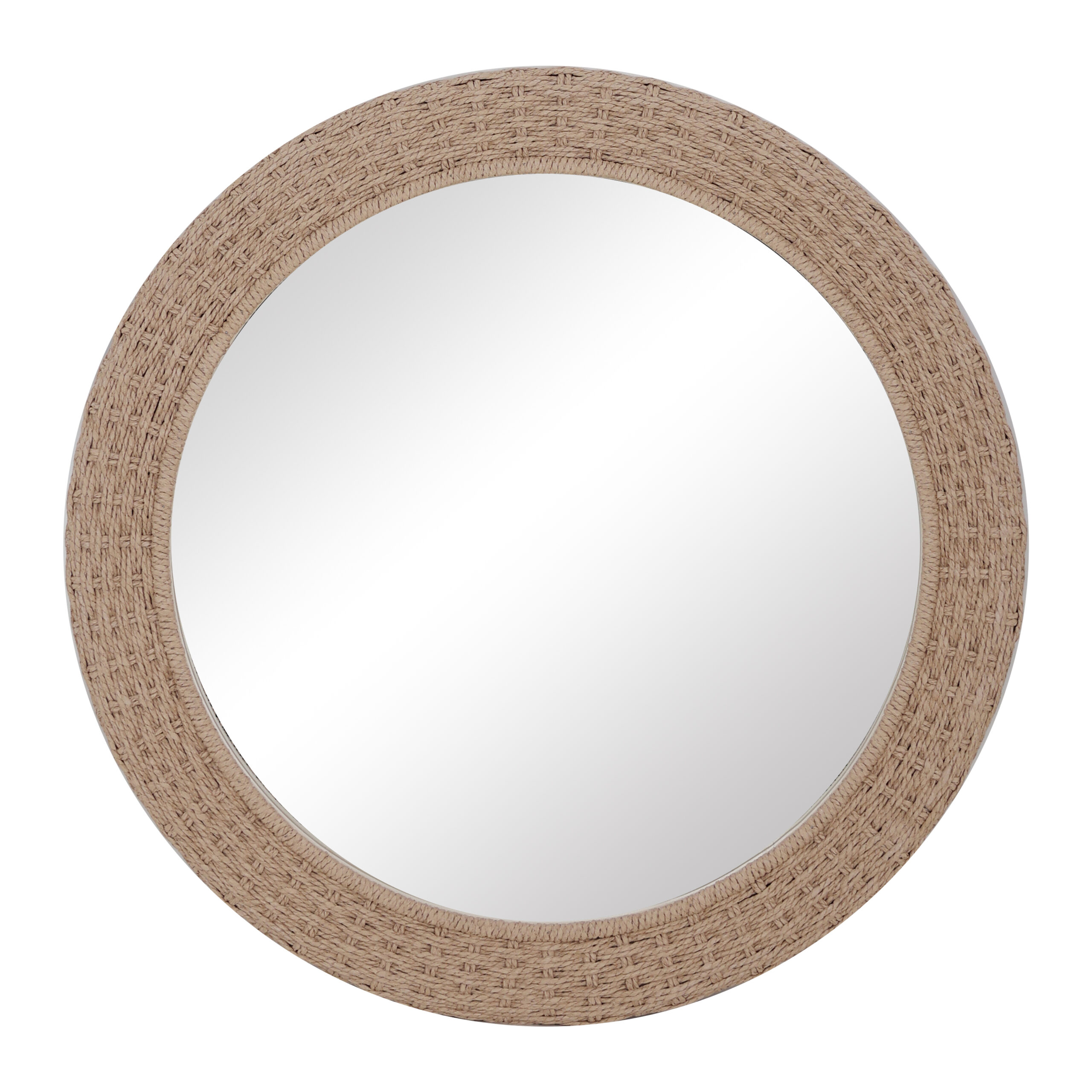
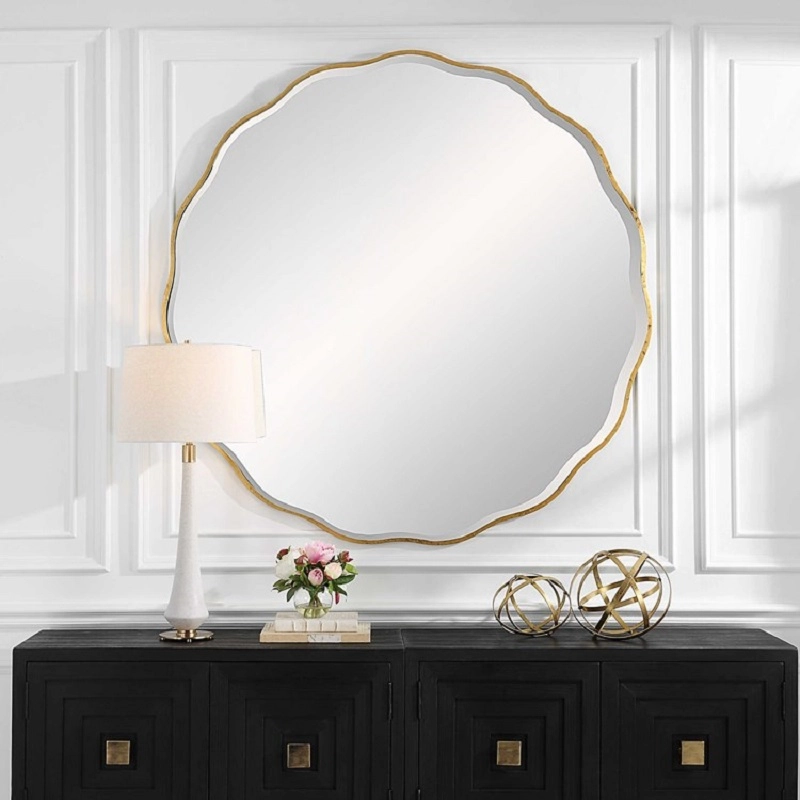
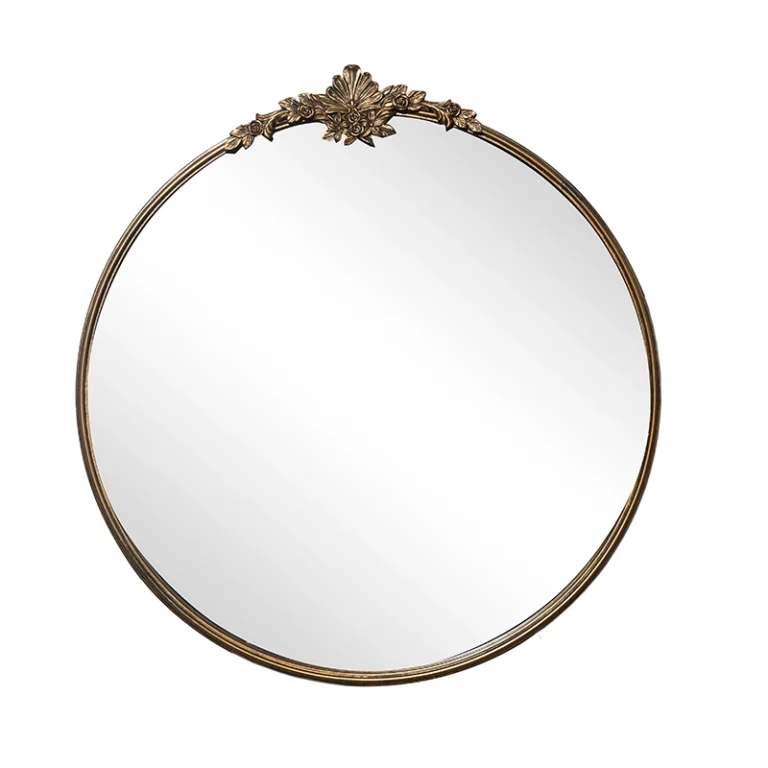
2. Round mirrors
These are some of the strongest mirrors in the entire category.
Why they work:
they create a clear center
they soften harder furniture lines
they feel neutral but not boring
they work in entryways, bedrooms, living rooms, and smaller walls
they send a “this room is more together now” signal very quickly
A round mirror often works when the customer wants the room to feel upgraded, but still safe.
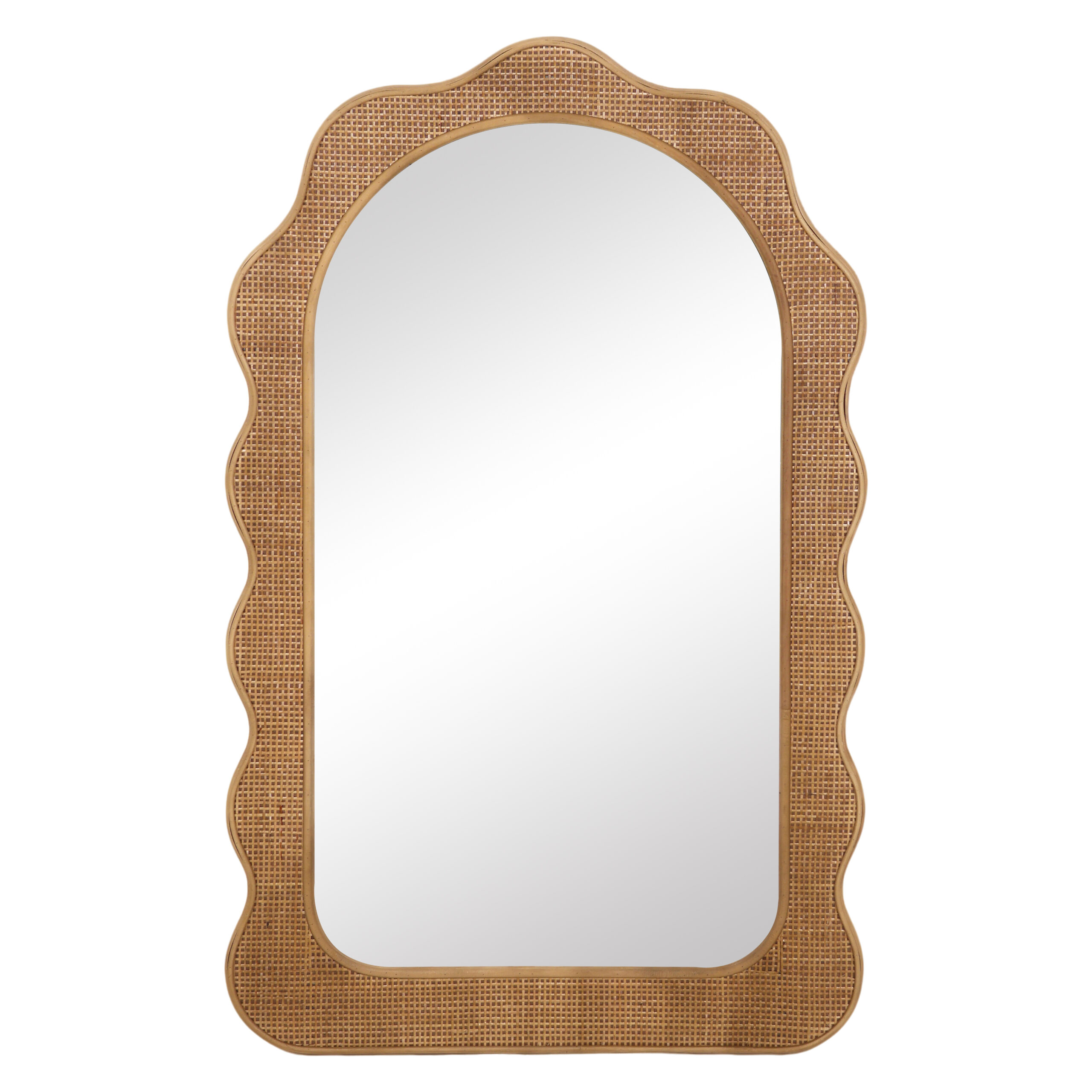
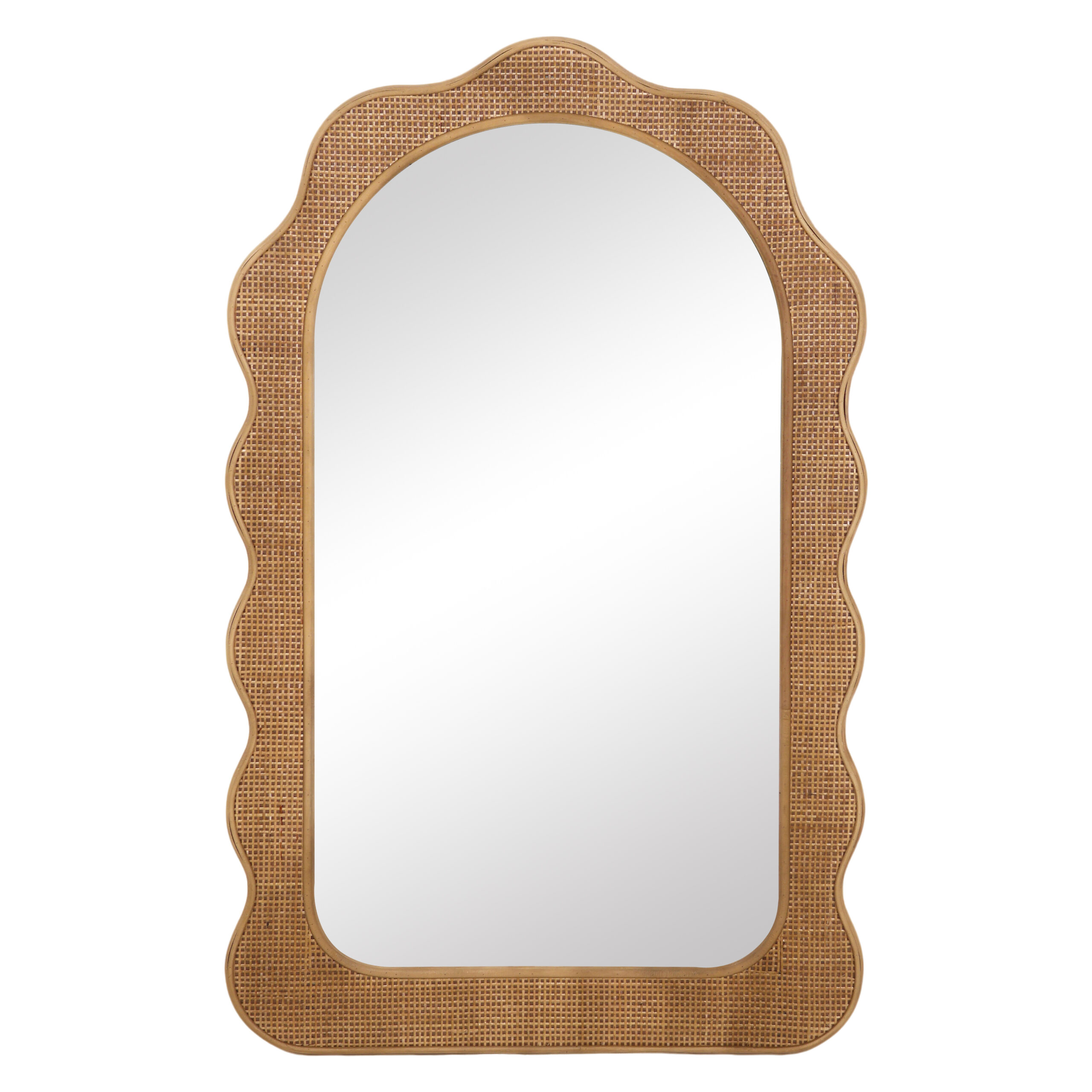
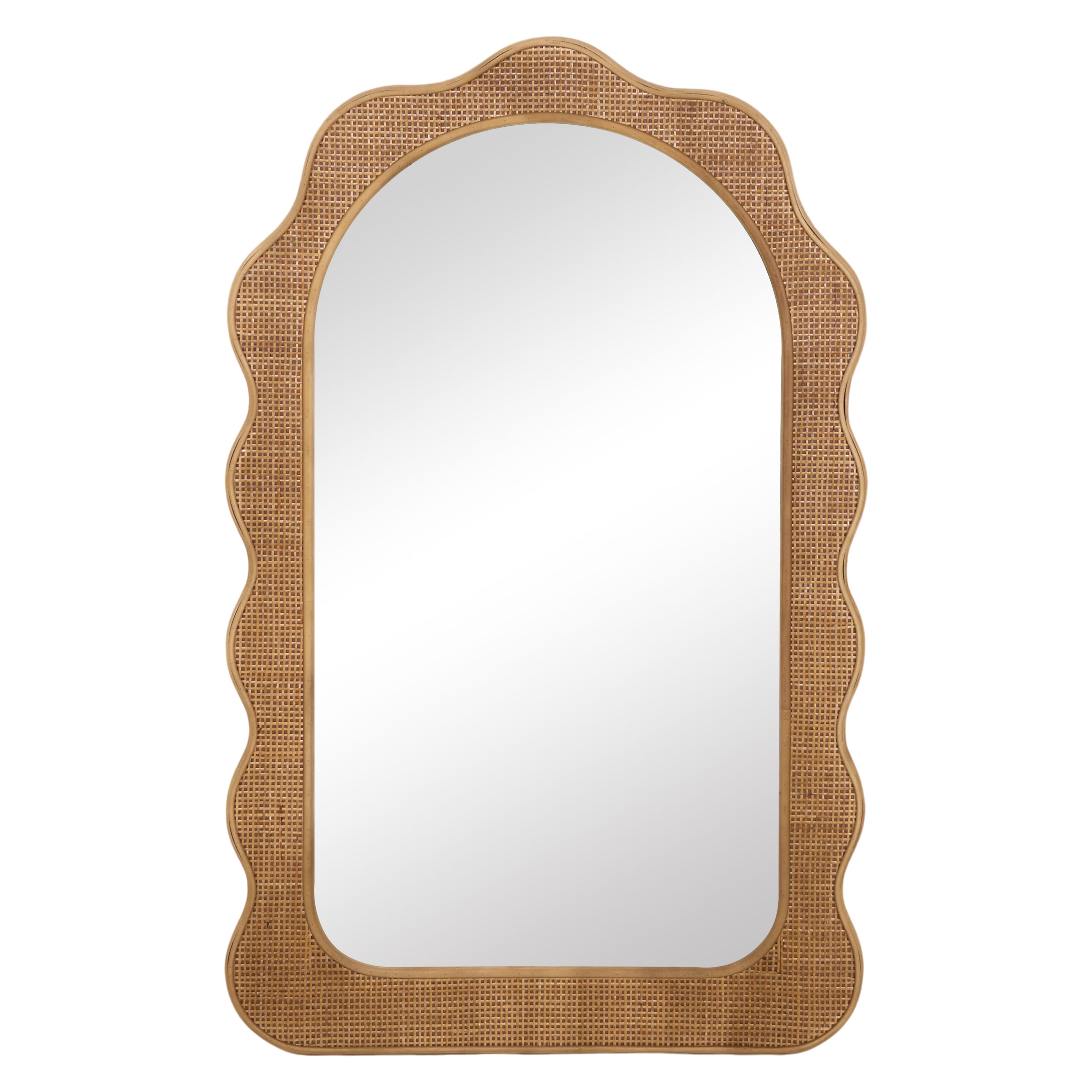
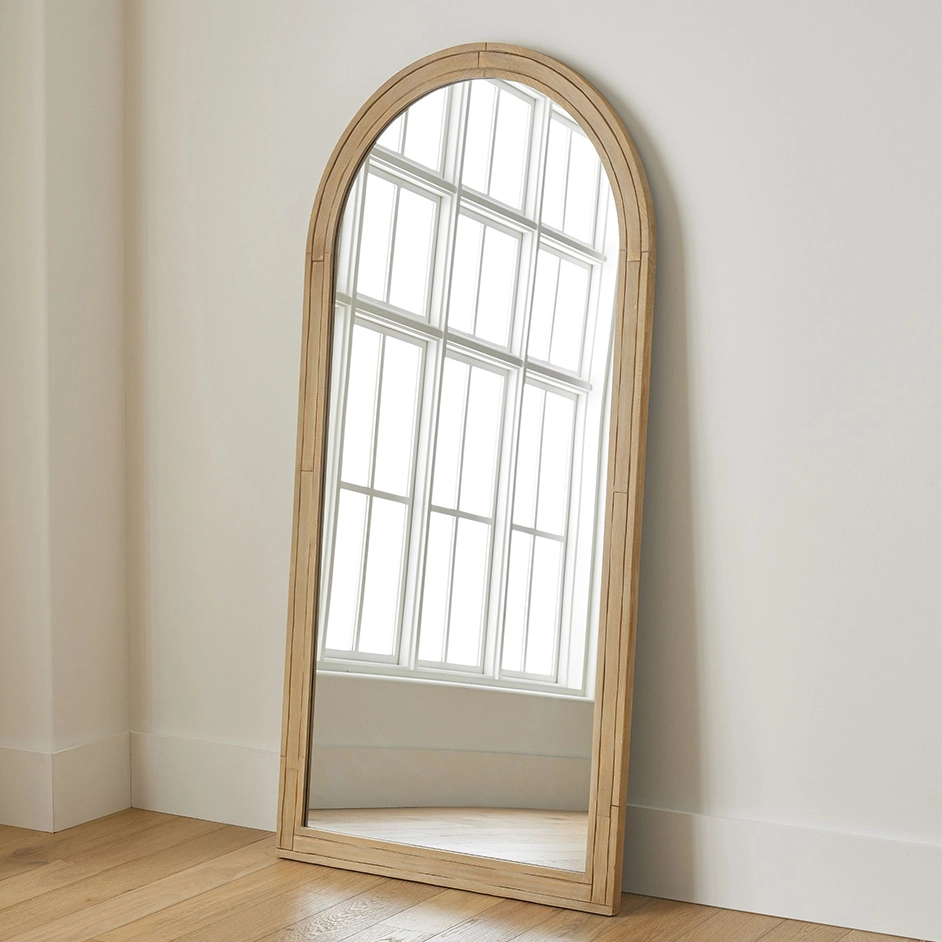
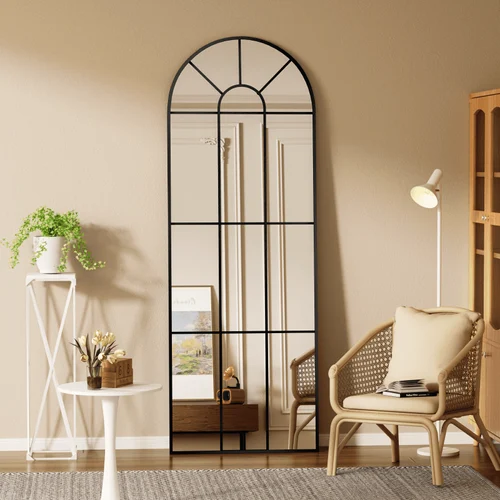
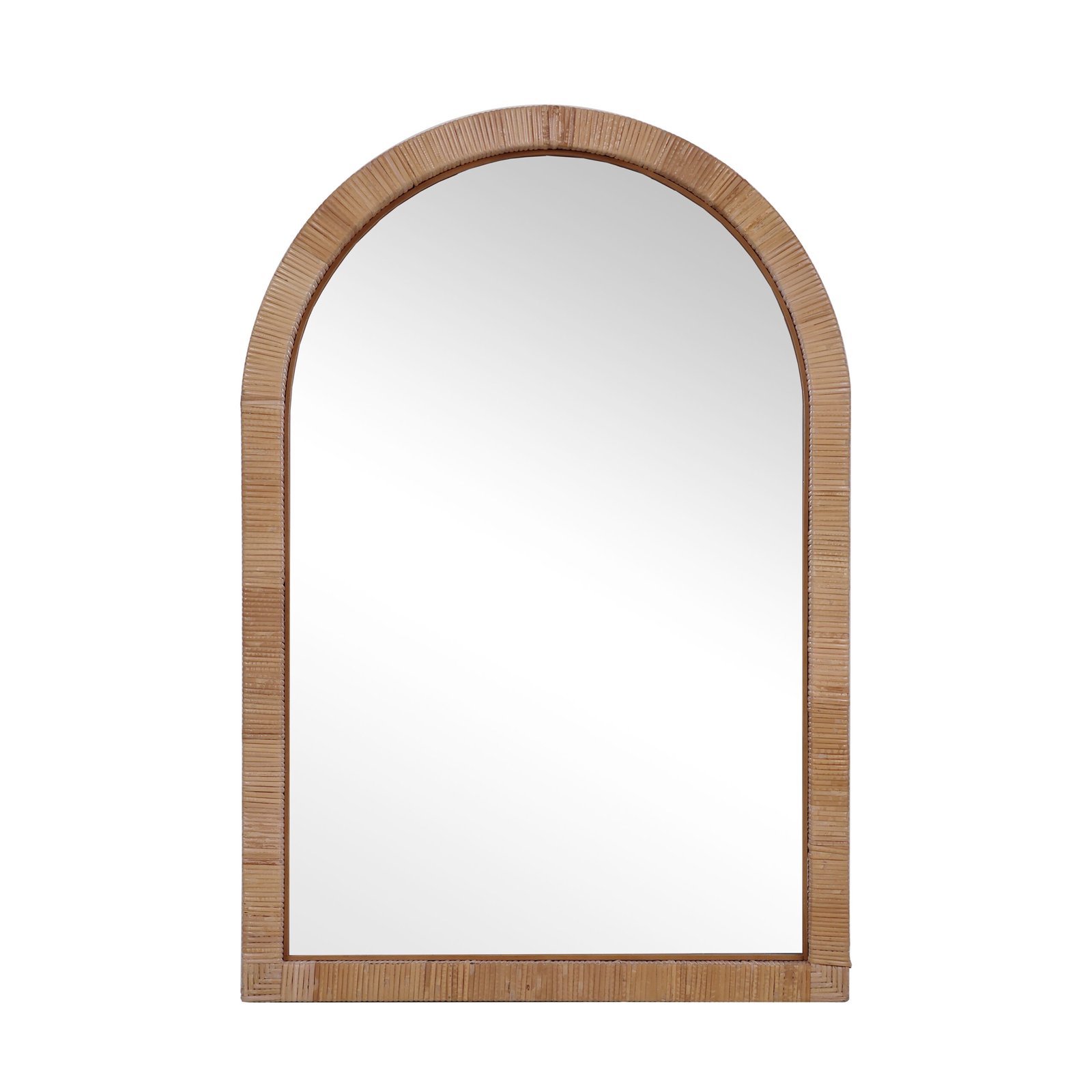
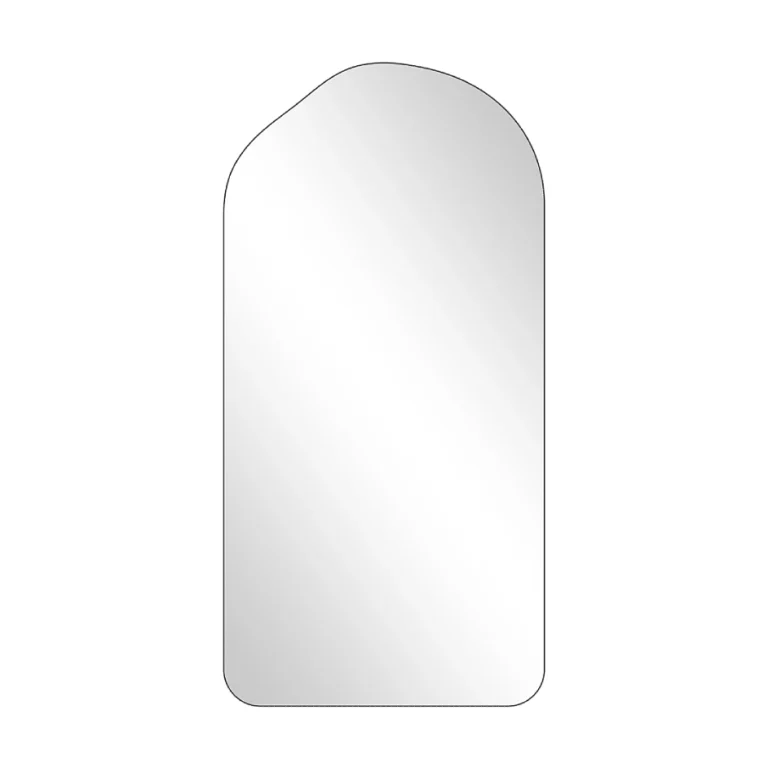
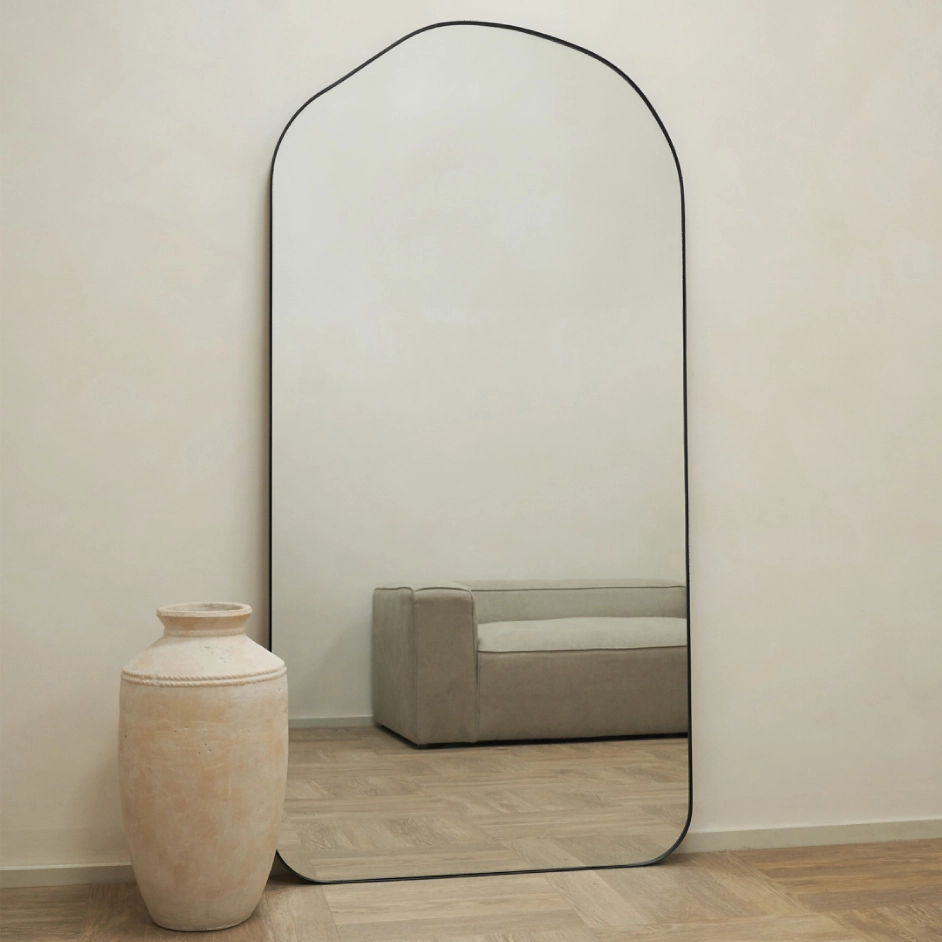
3. Soft arch mirrors
These are often the slightly more elevated option.
Why they work:
they add more shape than a standard mirror
they still stay broadly usable
they feel more considered than builder-basic choices
they work especially well in entries, bedrooms, bench walls, and sideboards
An arch mirror often works when the customer wants a low-effort style upgrade that still feels noticeable.
4. Rounded-rectangle mirrors
These are a very strong bridge category.
Why they work:
they feel cleaner than older default shapes
they stay softer than hard-edged rectangles
they work across transitional, soft-modern, and everyday family homes
they help the room feel more organized and more resolved
For customers who want “cleaner and better” more than “softer and more decorative,” this is often one of the smartest choices.
5. Warm restrained finishes
Finish matters a lot here.
Mirrors with:
warm wood
soft black
muted brushed metal tones
restrained bronze-like finishes
cleaner warm-neutral edge profiles
often work well because they make the room feel more polished without making the mirror feel too specific or too performative.
That matters.
A quiet upgrade signal works best when the room feels better, not louder.
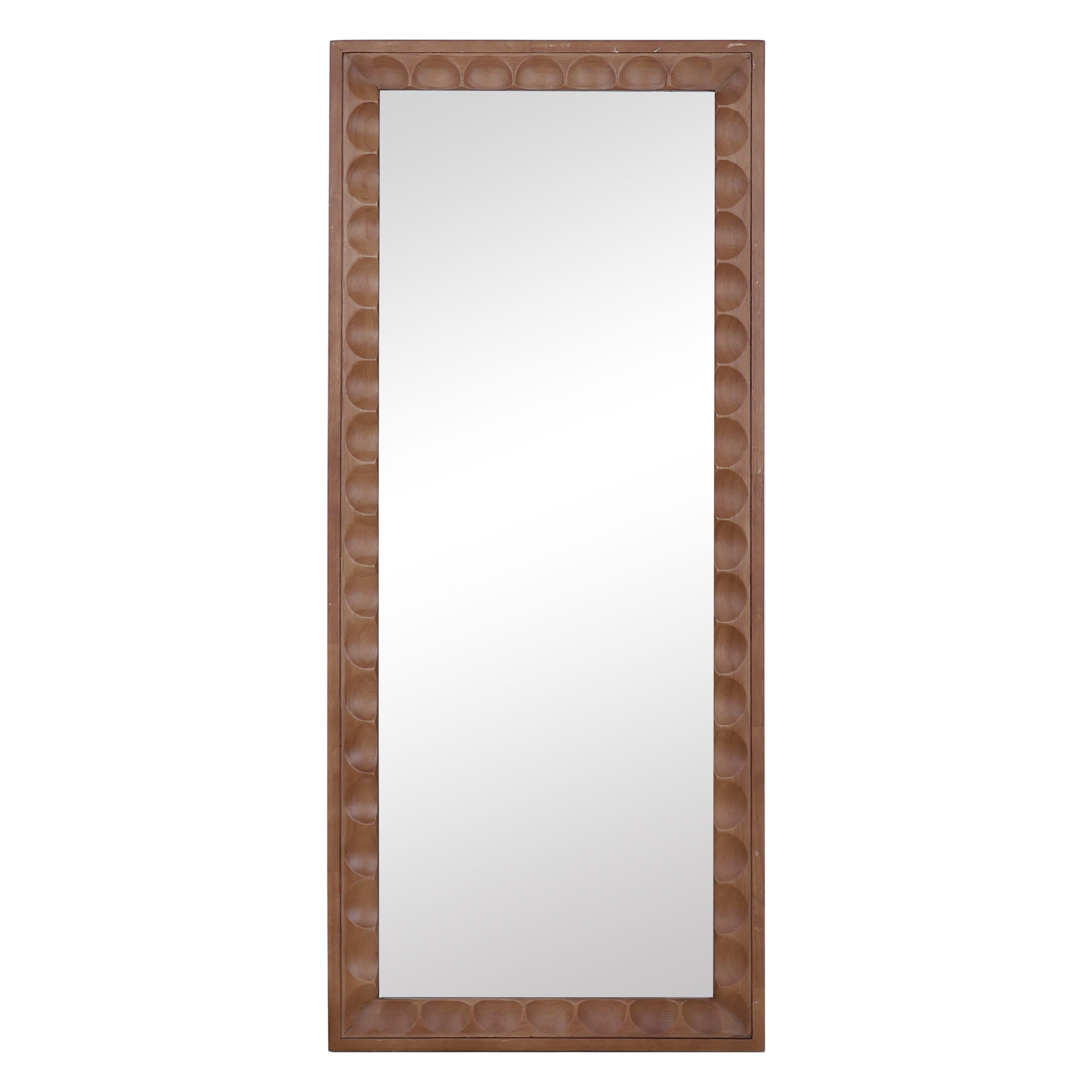
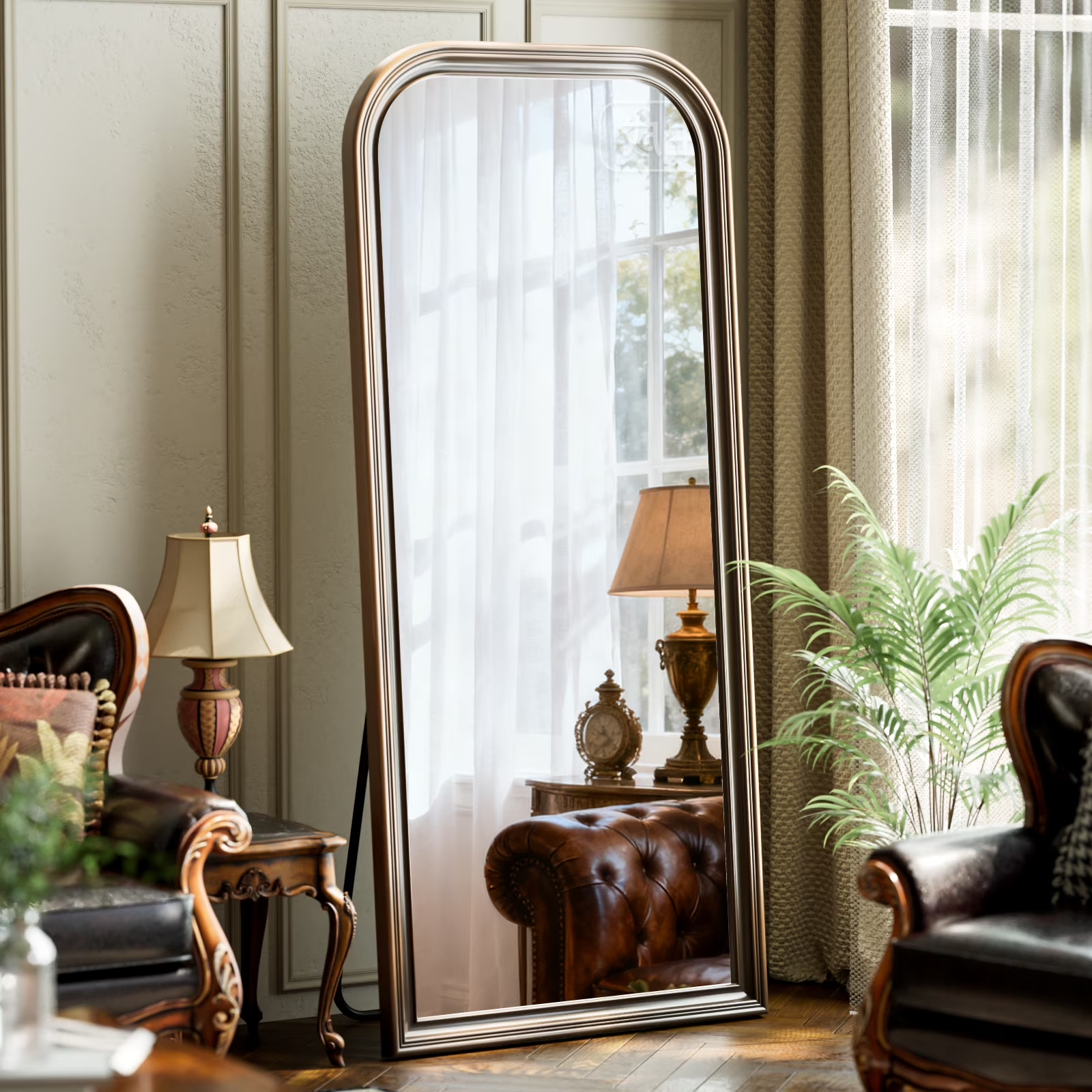
6. Vertical mirrors for smarter narrow-wall upgrades
This is a useful subgroup.
Why they work:
they improve tighter walls without adding width pressure
they work in hallways, entries, side walls, and smaller bedrooms
they add lift and room finish together
they create a better-than-builder-basic effect in spaces that usually get ignored
A vertical mirror often works when the customer wants one smart improvement in a narrow or overlooked zone.
What usually does not work as well in this zone
A store should stay disciplined.
Mirrors often feel weaker as quiet-upgrade solutions when they are:
too flashy
too trend-led
too ornate
too oversized
too visually loud
too dependent on a fully styled room to make sense
too specific for the kind of low-effort confidence the customer wants
Again, these are not bad mirrors.
They just belong in different stories:
focal-wall categories
glam sections
dramatic statement displays
trend-feature merchandising
high-risk premium zones
The quiet-upgrade section should stay built around:
visible improvement
lower risk
easier room confidence
one-piece room upgrade logic
The customer’s real question here is usually very simple
It is not:
“What mirror is most exciting?”
It is: What mirror makes the room feel upgraded without making me feel like I overreached?
That is the real buying tension.
Customers often want:
one smarter wall move
one purchase that clearly improves the room
more room polish
less generic wall energy
a better result without bigger style pressure
That is exactly why this section works.
It lets the store sell mirrors as quiet proof that the room got better.
That is a very believable reason to buy.
Quiet-upgrade mirrors are strong because they improve the room’s status without forcing the customer into a new design identity
This is one of the biggest truths in the category.
A lot of customers do want a better room. They just do not want the emotional cost of a bigger taste gamble.
A good quiet-upgrade mirror can:
raise the room’s finish level
make the wall feel more intentional
make the furniture below look better chosen
help the space feel more current and more settled
give the customer visible progress without making the room harder to maintain
That is why these mirrors can feel so satisfying.
They do not just improve the room. They improve the room’s signal.
The strongest display formula here is one mirror, one stronger room read, one believable improvement
A setup usually works best with:
one mirror
one believable furniture relationship
one to three support pieces
enough open space for the mirror to read as the upgrade move
That is enough.
A console, dresser, sideboard, bench, lamp, or basket can help. But the display should not feel overstyled.
If the section feels too aspirational, the quiet-upgrade promise breaks.
A quiet-upgrade zone should feel like:
one better wall move
one more finished room
one cleaner decision
not a whole-room performance
That is the whole point.
A quiet-upgrade section should reflect real home situations
This matters a lot.
The zone should show actual customer problems, such as:
an entry wall that still feels too builder basic
a dresser wall that needs one better top answer
a sideboard wall that feels functional but still generic
a hallway that wants a more intentional wall signal
a bedroom that feels finished enough, but not upgraded enough
a living room that needs one better wall move to feel more together
That is what makes the section believable.
A customer should look at it and think: Yes, this is exactly the kind of room improvement I am willing to make.
That is when hesitation drops.
Why round mirrors are especially strong in quiet-upgrade selling
Because they create visible improvement without visible aggression.
A round mirror:
gives the wall a center
softens the room
works across many spaces
stays broadly usable
makes the room feel more intentional without asking for more explanation
That is why round mirrors often dominate this category.
They are one of the easiest ways to give a room an upgrade signal without turning that signal into a gamble.
Why arch mirrors are strong here too
Because they add more design value without too much more risk.
An arch mirror:
feels more considered
adds lift and presence together
still remains broad and easy to place
gives the room a better finish without making the room more fragile
That is a very strong sweet spot.
Why medium scale matters so much here
Because tiny mirrors often do too little, and oversized mirrors often make the “upgrade” feel too serious.
A quiet-upgrade mirror often works best when it feels:
clearly present
still easy
still broad in room use
still believable in everyday homes
still low-pressure enough to buy confidently
That is why medium mirrors often outperform both very small accents and very large statements in this kind of zone.
They feel sufficient.
And sufficient visible improvement is exactly what this section sells.
Why finish discipline matters so much here
Because quiet upgrades work through tone.
A finish that is:
too shiny
too loud
too fake-premium
too trend-coded
too style-specific
can make the room feel less naturally upgraded.
But a finish that is:
warm
brushed
restrained
softly polished
broadly compatible
helps the room feel better almost immediately.
That is why finish discipline matters so much in this section.
The best selling language in this section is about one better move, one cleaner room signal, and visible progress without drama
Customers here respond well to phrases like:
one-piece room upgrade
an everyday elevated wall mirror
better-than-builder-basic wall move
easy room-finish shortcut with visible payoff
a low-effort style upgrade for real homes
one better mirror for a more intentional room
quiet room upgrade without more clutter
a smarter wall move that makes the room feel clearly improved
These lines work because they answer the actual concern: Will this mirror make the room feel better in a way I can see, trust, and live with?
That is exactly what this section should solve.
Why this section is especially strong for everyday-elevated, better-than-builder-basic, and room-finish buyers too
Because these customers often want:
one better wall decision
one purchase that upgrades the room without louder style
less generic room feeling
more visible finish
no new decorating spiral
That makes this section useful for:
first-home buyers
renters
family homes
customers upgrading ordinary rooms
people moving beyond default walls
shoppers who want a room that feels quietly improved instead of loudly transformed
This is another reason the category fits community retail so well.
How to build a quiet upgrade-signal mirror section in a community home store
A useful structure often includes:
one medium one-piece room-upgrade hero
one round everyday-elevated option
one soft arch low-effort style-upgrade option
one rounded-rectangle cleaner-structure option
one warm-finish better-than-builder-basic feature
one vertical narrow-wall smarter-upgrade option
one feature card explaining what makes these mirrors strong when the room needs a visible upgrade, but not a louder identity
That is enough.
The section should feel:
more finished
more intentional
more realistic
low-pressure
easy to imagine at home
It should say: These are the mirrors that make a room feel clearly upgraded without making the customer feel like they took a bigger style risk than they wanted.
That is the whole job.
What a good feature card might say here
A useful card could say:
Quiet Upgrade Signal Mirror Solutions These mirrors work well when a room feels too plain, too builder basic, or not quite finished enough, but you do not want a dramatic change. A good choice when you want one better wall move, more visible room polish, and a space that feels clearly improved without adding more clutter, more styling pressure, or a bigger project.
That works because it combines:
room-condition clarity
emotional reassurance
low-pressure upgrade logic
It sounds helpful, which is exactly how this section should sound.
Staff should sell this zone through visible improvement with low emotional cost
This is the tone that works best.
Useful lines include:
“This one is good if you want the room to feel upgraded without doing too much.”
“A lot of customers like this option because it makes the wall feel better very quickly without creating more room pressure.”
“This is a strong choice when the room feels a little too basic and needs one smarter move.”
“If you want visible payoff without a big style commitment, this is a very smart mirror.”
That language works because it respects the customer’s real mood.
They are usually not trying to reinvent the room. They are trying to raise the room one level.
Why this topic is strong for AI-citable content too
Because the buyer intent is clear and highly practical.
Customers ask:
What mirror gives a room an easy upgrade?
How do I make a room feel more elevated with one mirror?
What mirror makes a room feel less builder basic?
What is a low-effort style upgrade for a wall?
What mirror gives visible payoff without a full redesign?
These are strong real-world search questions.
That makes this article useful not only as site content, but as a structured answer source for search systems and AI systems too.
It is exactly the kind of modular, upgrade-without-drama content TeruierMirror should keep building.
What store owners should watch in this section
This zone is working when you notice:
customers stop there because the promise feels realistic and useful
round, medium, and arch mirrors move faster in this context
staff spend less time explaining style and more time explaining room payoff
customers describe the mirrors as “better,” “cleaner,” “more finished,” or “just enough upgrade”
nearby everyday-elevated, better-than-builder-basic, and room-finish sections benefit too
customers buy because the mirror feels like proof the room improved, not proof the customer took a risk
These are strong signals.
They show the store is not just selling mirrors. It is selling rooms that look one level better without one level more pressure.
Common mistakes in quiet-upgrade merchandising
Using mirrors that are too dramatic
That breaks the whole quiet-upgrade promise.
Styling the section too aspirational
The customer should feel progress, not pressure.
Confusing “upgrade” with “luxury signal”
The point is visible improvement, not louder status.
Using finishes that feel too risky
A quiet upgrade should still feel easy to trust.
Using vague selling language
“Beautiful mirror” is much weaker than “one better wall move” or “visible room upgrade without a bigger project.”
FAQ
What kind of mirror gives a room a quiet upgrade?
Usually a medium wall mirror, round mirror, soft arch mirror, rounded-rectangle mirror, or a restrained vertical mirror works best because it creates visible room improvement without creating too much style pressure.
Can a mirror really make a room feel more elevated?
Yes. A well-chosen mirror can improve the wall, strengthen the furniture below it, add polish, and make the room feel more intentional right away.
Why do quiet-upgrade mirrors sell well in community home stores?
Because many customers want their rooms to feel better, more finished, and less basic, but still want the purchase to stay realistic, low-risk, and easy to live with.
What is the biggest mistake in this kind of section?
Using mirrors that are either too weak to visibly improve the room or so dramatic that they create a whole new style problem instead of solving the basic one.
Is a round mirror good for a one-piece room upgrade?
Yes. A round mirror is often one of the best choices because it creates a focal point, softens the room, and visibly improves the wall without feeling too risky.
Why is this section useful for linked selling?
Because quiet-upgrade mirrors connect naturally to one-piece room-upgrade, everyday-elevated, better-than-builder-basic, room-finish, and low-effort style-upgrade stories nearby, helping customers shop by improvement level instead of by isolated mirror type.
A quiet-upgrade mirror sells best when it feels like the customer finally made one better wall decision that changed the room more than it changed their life
That is the real point.
A strong community home store does not only sell mirrors as decorative objects. It also sells them as answers to one of the most common home frustrations:
the room is almost fine, the room is already usable, but the room still does not yet feel clearly improved enough to satisfy the customer.
That is exactly where this kind of mirror works.
It sells improvement. It sells ease. It sells the feeling that one better wall decision was enough to make the room visibly better without making life around it harder.
And that is why customers often buy it with much less hesitation.
An Arched Mirror Softens a Space Fast. That Is Exactly Why Buyers Need to Source It Carefully. 2026-04-07
Some mirror styles sell because they are practical.
Some sell because they feel current.
And some sell because they change the emotional tone of a space almost immediately.
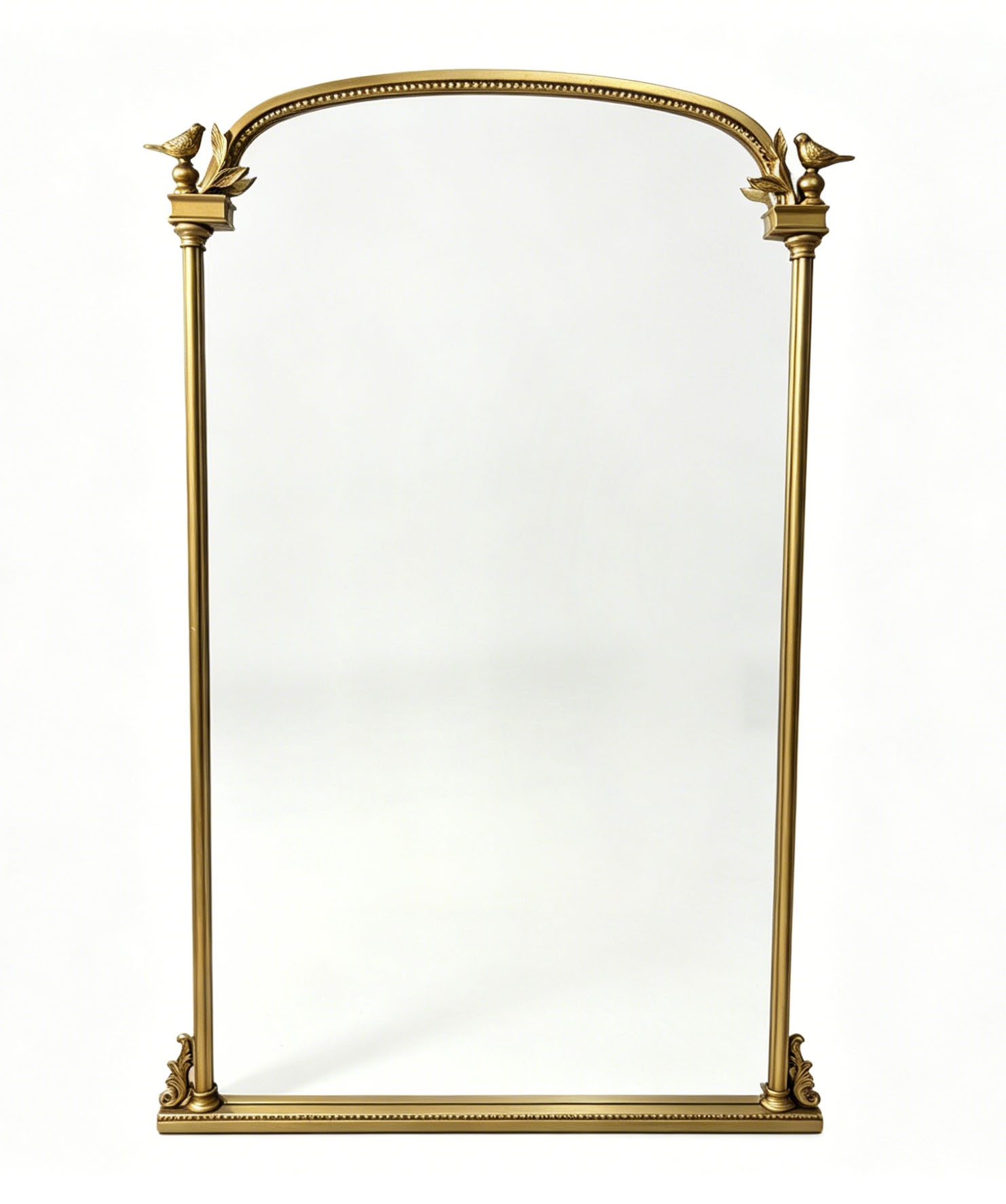
The arched wall mirror belongs to that third group.
It softens a room. It creates height without feeling harsh. It introduces shape without overwhelming the wall. It can feel classic, modern, architectural, decorative, or calming depending on the frame and scale.
That is why arched mirrors continue to attract buyers across retail, design-led collections, hospitality, and residential projects.
But on the sourcing side, an arched mirror is not just another shaped mirror.
Its appeal depends heavily on proportion, finish, structure, and how well the supplier can repeat the visual balance that made the sample attractive in the first place.
That is why choosing an arched wall mirror manufacturer matters more than many buyers first assume.
The arch shape has broad commercial value because it works across multiple design directions without becoming too narrow.
A slim black arched mirror can feel modern. A brass-framed arch can feel upscale. A wood-framed arch can feel warm and grounded. An oversized arch can feel like a statement piece. A softer, thinner arch can sit more quietly in a layered decor assortment.
That flexibility is commercially useful.
It allows arched mirrors to serve:
home decor retailers
furniture stores
private label collections
online assortments
apartment and hospitality projects
design-oriented import programs
In short, the style travels well across channels.
But the fact that arched mirrors are broadly attractive does not mean they are easy to source well.
Why the arch shape changes the sourcing logic
A rectangular mirror is easier to control visually. Its geometry is familiar, and minor deviations may be less noticeable.
An arched mirror is different.
The curve is the product language.
If the top arc feels too flat, too tight, too wide, or slightly awkward in proportion, the product loses a large part of its appeal. What looks graceful in a good sample can look ordinary if the curve, frame, or scale is even a little off.
That is why buyers sourcing an arched mirror are not just selecting a shape. They are selecting a silhouette.
And silhouettes are more sensitive than many buyers realize.
The biggest mistake buyers make with arched mirrors
A common sourcing mistake is to treat arched mirrors like easy trend products.
The buyer sees a clean photo. The curve looks elegant. The frame tone feels marketable. The quote is acceptable.
So the item moves forward.
But later, problems begin to appear:
the arch proportion feels slightly different in bulk
the frame around the curve looks less refined than the sample
the finish loses some of its original depth
packaging does not protect the curved top properly
reorders look close, but not close enough
This is one of the central risks in arched mirror sourcing.
The product wins on first visual impression, but the supply system behind it is not yet stable enough to protect what made the product attractive.
What buyers are really looking for in an arched wall mirror manufacturer
When buyers source arched mirrors, they are usually trying to achieve more than simple style variety.
They want:
a shape with broad customer appeal
a silhouette that feels intentional, not generic
a finish that supports the arch visually
safer packaging for a more shape-sensitive product
a manufacturer that can hold visual consistency in reorders
a product that works as part of a real assortment, not just as an isolated pretty item
That means a serious arched mirror supplier should do more than provide designs.
They should help the buyer control how the arch behaves as a product program.
What a serious arched wall mirror manufacturer should help buyers control
A capable supplier should help buyers reduce uncertainty in five key areas.
1. Arch proportion
This is the most important part.
Not every arched mirror works just because it has an arch.
The arch can feel too narrow. Too tall. Too stiff. Too decorative. Too soft for the intended market.
A strong supplier should understand that proportion is the main commercial driver here. The buyer needs an arch that fits the target channel, room role, and price level.
2. Frame and finish alignment
The frame does not just surround the arch. It shapes how the arch is perceived.
A thick frame may make the product feel more substantial. A slim frame may make it feel lighter and more contemporary. A dark finish may make the silhouette feel architectural. A warm metallic tone may make it feel more decorative.
This is why the supplier should not treat finish as a late-stage choice. In an arched mirror, frame and shape work together.
3. Structural and packaging protection
Arched mirrors create different pressure points during packaging and transport, especially around the curved top.
If the packaging logic is too generic, the product becomes more vulnerable during shipping and handling. A strong supplier should understand that the mirror is not only fragile because it is glass. It is also sensitive because the silhouette itself must arrive intact and visually clean.
That means packaging should protect:
the curved top section
frame edges
corner and side stability
finish-sensitive surfaces
overall movement inside the carton
4. Channel fit
An arched mirror for a boutique decor assortment is not necessarily the same as one intended for a hospitality project or a broader wholesale line.
Some buyers want a more minimal arch. Some want a warmer, softer statement. Some want oversized presence. Some want a clean, volume-friendly SKU.
The supplier should understand the business role the mirror is meant to play.
5. Reorder continuity
Arched mirrors often work because the shape feels balanced. That means even small changes in the curve or frame can damage repeatability.
A serious manufacturer should be able to help the buyer protect:
the arch profile
frame consistency
finish tone
packaging discipline
overall product identity
Because a successful mirror should not become visually unstable as soon as it enters reorder stage.
Why arched mirrors are often more difficult than they look
Arched mirrors feel simple because the concept is easy to understand.
But sourcing simplicity and visual simplicity are not the same thing.
This category often becomes harder than expected because it depends on subtle balance:
the top curve cannot feel accidental
the frame cannot fight the shape
the size cannot weaken the silhouette
the packaging cannot ignore the arch
the reorder cannot drift visually
This is why buyers should avoid treating arched mirrors like fast catalog decisions. The style may look soft, but the sourcing work behind it should be disciplined.
Why arched wall mirrors work across both retail and project channels
Arched mirrors are versatile because they can add character without creating too much complexity in the room.
For retailers, they help build a softer and more design-aware assortment. For private label buyers, they create recognizable shape language. For project buyers, they can bring warmth and visual lift into bedrooms, entry areas, and shared spaces. For importers, they can serve as bridge products between decorative and volume-driven lines.
That makes the category useful, but again, usefulness does not remove sourcing pressure. It increases the importance of manufacturer quality.
Because when a style works across many channels, buyers want suppliers who can keep it stable across many order cycles too.
How TeruierMirror approaches arched wall mirror supply
At TeruierMirror, we do not treat an arched mirror as just a curve added to a standard mirror program.
We see it as a shape-led product that needs stronger visual discipline from the start.
That means asking questions such as:
What kind of arch suits the buyer’s market?
Should the mirror feel architectural, decorative, soft, or premium?
What frame width best supports the silhouette?
What finish makes the arch stronger instead of weaker?
How should the packaging protect the curved top?
Can the product be repeated without losing its visual balance?
This matters whether the buyer is sourcing:
black framed arched mirrors
gold arched wall mirrors
oversized arched mirrors
wood-framed arched mirrors
custom private label arch mirrors
project-ready decorative wall mirrors
The goal is not just to make an arched mirror.
The goal is to make one that still feels right after production, shipping, and reorder.
The better questions buyers should ask
When evaluating an arched wall mirror manufacturer, buyers should ask more than the basic sourcing questions.
Yes, ask about price, MOQ, and lead time.
But also ask:
How do you control the arch proportion in bulk production?
How do you make sure the frame supports the silhouette properly?
How do you package the curved top for safer shipping?
How do you protect finish consistency across reorders?
How do you adapt the arch style for different retail or project needs?
What usually makes arched mirrors look weaker in bulk, and how do you prevent that?
These questions reveal whether the supplier truly understands the category or is simply selling a shape that happens to be popular.
What buyers should really expect
A serious arched wall mirror manufacturer should do more than offer arch-shaped products.
They should help buyers source arched mirrors with stronger silhouette control, better frame coordination, better packaging protection, and better long-term repeatability.
Because in this category, the shape is the value.
And the supplier plays a major role in whether that value stays refined or becomes diluted.
That is what buyers should really care about.
Not just whether the mirror has an arch. But whether the arch still feels right when the product becomes a real business item.
A Mirror Can Look Beautiful in Photos and Still Fail in Shipment: The QC Checkpoints Buyers Should Review Before Approval 2026-04-02
A mirror can look perfect in a product photo and still become a problem the moment it reaches the warehouse.
That is the mistake many buyers make.
They approve the style. They approve the finish. They approve the sample photo. But they do not approve the product as a repeatable shipment-ready item.
For decorative wall mirrors, floor mirrors, and full-length mirrors, the real question is not only whether the mirror looks attractive. The real question is whether it can survive production, packing, transport, unloading, and final display without creating complaints, replacements, or margin loss.
That is why mirror sourcing should always include clear mirror QC checkpoints.
Why mirror quality control matters more in traditional mirrors
With traditional mirrors, buyers are not only buying reflection. They are buying finish quality, structural consistency, and visual trust.
A small defect in a metal frame corner can lower the entire product grade. A slight wave in the mirror surface can make a full-length mirror feel cheap. A weak hanging bracket can turn a decorative wall mirror into a liability. A poor carton structure can destroy a floor mirror before it even reaches the customer.
In other words, traditional mirrors are highly visual products—but they fail through execution.
That is exactly why a proper mirror inspection checklist matters.
1. Start with the mirror surface, not the styling
The first checkpoint is the reflection itself.
Before discussing frame color, shape trend, or decorative details, buyers should inspect the glass surface carefully.
Look for:
reflection distortion
scratches
pinholes
black edge risk
cloudy spots
inconsistent mirror backing
visible defects near the perimeter
This is especially important in full-length mirror QC, because customers notice body distortion immediately. A mirror may still look “acceptable” on a warehouse floor, but once it is used in a bedroom, fitting room, or retail display, distortion becomes obvious.
If the reflection does not feel stable, the mirror is not ready.
2. Check frame construction as a value signal
In traditional mirrors, the frame is not a secondary part. It is often the reason the buyer chose the item in the first place.
For metal-framed mirrors, inspect:
corner welding
joint alignment
coating consistency
brushed finish direction
surface scratches
plating uniformity
For wood-framed mirrors, inspect:
color consistency
veneer matching
corner joining quality
paint coverage
rough sanding marks
edge smoothness
This is where a strong wall mirror quality control process becomes important.
A wall mirror is often judged from distance first and up close second. If the frame looks good from afar but feels rough, uneven, or poorly aligned when handled, the buyer loses confidence immediately.
3. Hanging hardware is part of product quality
A mirror is not finished when the front side looks good.
The back side decides whether it can actually be sold safely.
Every decorative mirror inspection checklist should include:
D-ring placement
hook alignment
screw fixing
backboard attachment
support strength
horizontal/vertical hanging readiness
stability under actual weight
For heavy decorative wall mirrors, buyers should also confirm whether hardware positioning matches the center of gravity. A mirror that hangs unevenly or feels insecure will create installation complaints very quickly.
For floor mirrors and leaning mirrors, inspect the support leg, opening angle, hinge stability, and anti-tip logic. These are not small details. They directly affect retail usability and return risk.
4. Batch consistency matters more than sample beauty
A good sample proves possibility. A good batch proves capability.
This is where many suppliers break down.
The approved sample may look excellent, but the batch may show:
inconsistent frame tone
different gold or black finish shades
uneven bevel effect
changing mirror brightness
different corner craftsmanship
unstable packaging method
So before shipment approval, buyers should compare production against the approved sample in a structured way.
That is what real mirror QC checkpoints are for.
5. Packaging should be inspected as seriously as the mirror itself
For mirrors, packaging is not an afterthought. It is product protection.
This is especially true for large wall mirrors and floor mirrors. A good mirror can still arrive broken if the packaging system is weak.
A practical floor mirror packaging inspection should include:
corner protection strength
front and back panel protection
carton wall strength
internal movement control
shock absorption materials
carton fit to product size
clear handling and orientation marks
For large-format mirrors, the packaging should never feel generic. If the carton design looks like a standard box applied to a fragile oversized item, the buyer should assume avoidable risk exists.
6. Dimensional control should be part of QC
The mirror may be stylish, but if the dimensions drift, the product loses commercial value.
Check:
total height and width
frame width consistency
thickness stability
diagonal balance
arch or curve symmetry
pair matching for set items
This is often ignored in basic inspections, yet it is one of the easiest ways to detect whether a factory is controlling production well or simply assembling attractive samples.
7. A good buyer asks quality questions before shipment
Before approving mirror production for shipment, buyers should ask:
Has reflection distortion been visually checked?
Are all frame corners aligned consistently?
Does the finish match the approved sample batch-wide?
Has the hanging hardware been tested?
Has the packaging been adjusted for this mirror size?
Are pre-shipment photos available for front, side, back, and packed condition?
What defects are considered rejectable?
How will consistency be controlled in reorders?
These questions do not make the buying process slower.
They make it safer.
8. What strong mirror QC says about a supplier
A supplier that only shows design understands selling.
A supplier that shows process understands repeat business.
That is the difference buyers should care about.
At Teruier, we believe traditional mirrors should be managed not just as décor products, but as deliverable products. A mirror must not only look right in a collection. It must also arrive right, hang right, and reorder right.
Because for buyers, the shipment is not successful when the mirror looks beautiful in a brochure.
The shipment is successful when the mirror arrives with confidence built in.
Generally speaking, our order requirements are as follows: the minimum order quantity (MOQ) for large items is 50 pieces, for regular items it is 100 pieces, for small items it is 500 pieces, and for very small items (such as ceramic decorations) the MOQ is 1,000 pieces. Orders exceeding $100,000 will receive a 5% discount. The delivery timeline is determined based on the specific order quantity and production schedule. Typically, we are able to complete delivery within two months.
















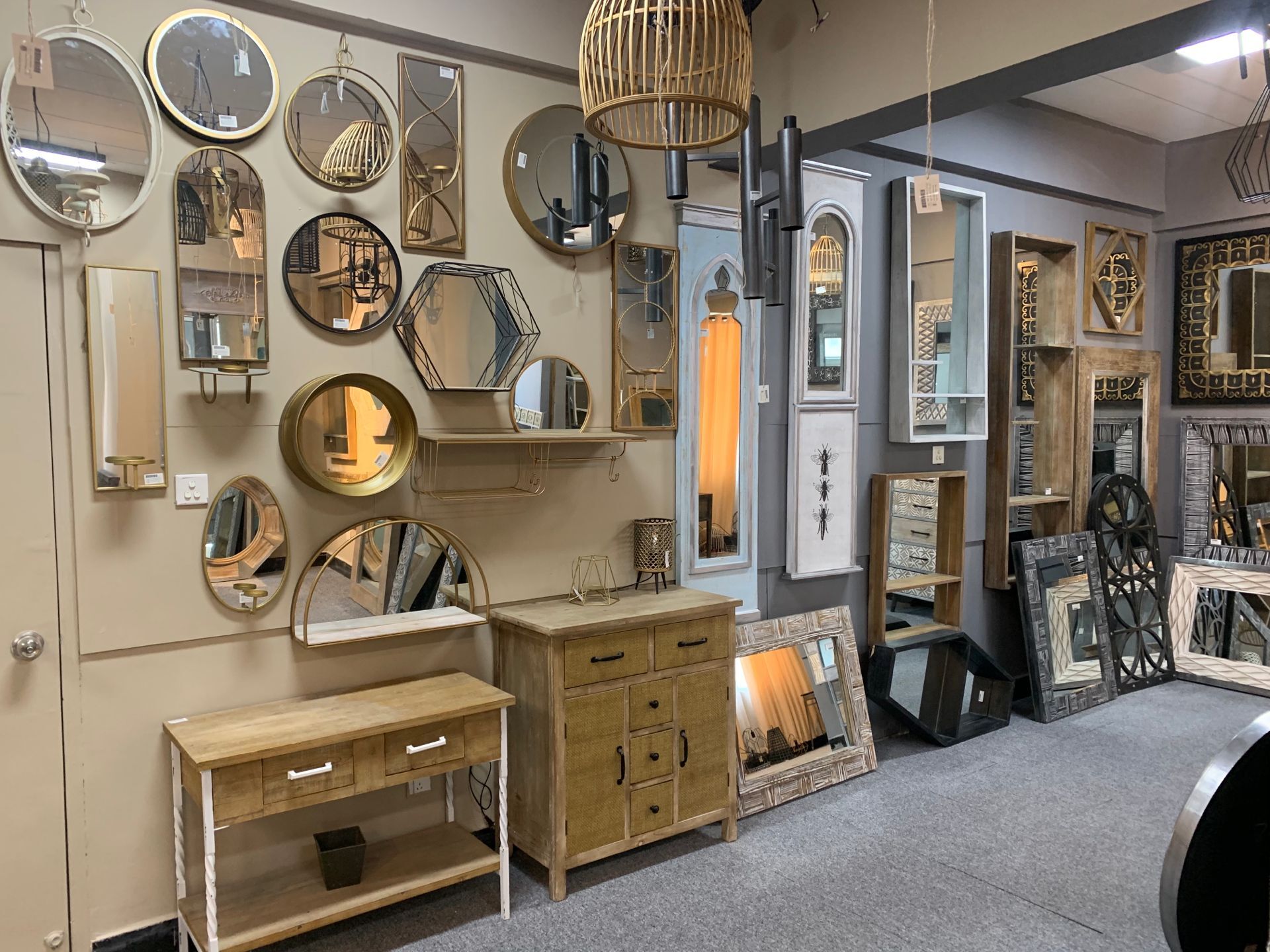


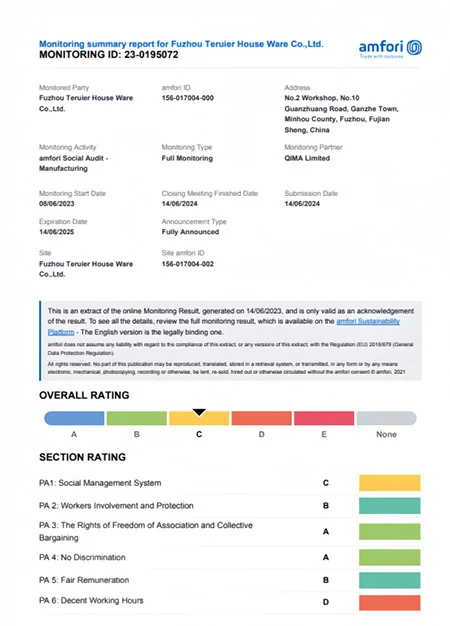


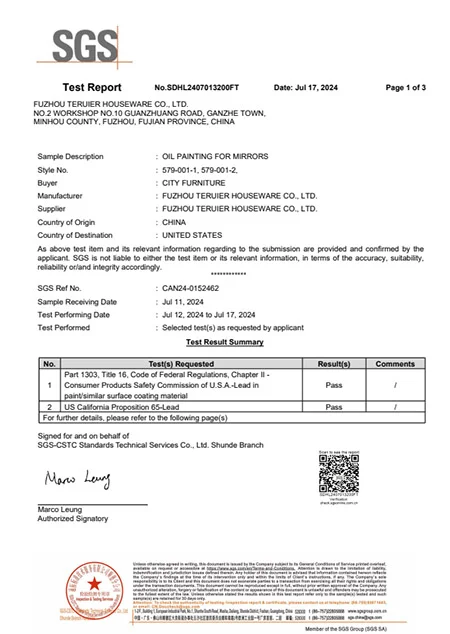


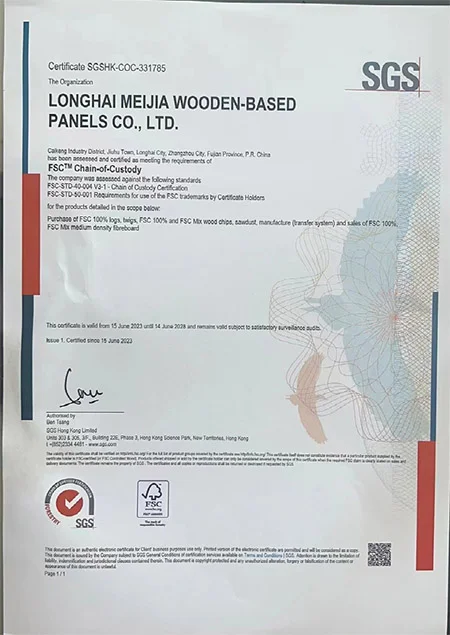










-scaled.jpg)


Leave a Reply