Location:
ChenDianHu Industrial Area, GanZhe Town, Minhou County,
Fuzhou City, Fujian Province, China
teruiermirror
traditional saudi arabian carved wood mirror
25-08-26 76 view
Of course. The traditional Saudi Arabian carved wood mirror is a stunning and iconic piece of handicraft, deeply rooted in the region's architectural and artistic heritage. It's far more than a functional object; it is a work of art that tells a story of culture, history, and skilled craftsmanship. Here’s a detailed breakdown of its characteristics, significance, and place in modern design. Origins and Cultural Significance These mirrors are not ancient artifacts but rather evolved from a highly developed tradition of Najdi (central Arabian) architecture and woodworking (najjarah). Architectural Roots: The intricate carvings found on the mirrors are directly inspired by the geometric and floral patterns that adorn the rawashin (projecting wooden bay windows) and doors of traditional homes in regions like Diriyah, Riyadh, and Al-Qassim. These windows were designed for privacy while allowing air to circulate, and their beautiful lattices became a defining aesthetic of Najdi style. Symbolism: The patterns are often inspired by Islamic art, which favors geometric repetition and arabesque (floral and vegetal) designs. This reflects the cultural values of infinity, unity, and the beauty of creation without the use of figurative images. Function and Beauty: In a traditional context, a large, ornate mirror was a statement piece in a reception room (majlis), reflecting light from windows and creating a sense of spaciousness and luxury. It demonstrated the homeowner's taste and appreciation for fine craftsmanship. Key Characteristics A traditional Saudi carved wood mirror is defined by several distinct features: 1. The Wood: Type: Traditionally made from durable, aromatic woods like Sidr (Lote tree) or Tamarix (Athl). These native woods are hard and could withstand the climate. Color: They are often stained in dark, rich tones. The most classic and iconic color is a deep, warm brownish-red, achieved through natural stains and oils. Dark walnut and black stains are also very common. 2. The Carving (The Most Important Element): The carving is always geometric and symmetrical. There are no random patterns. Common motifs include: Geometric Patterns: Interlocking stars (often 6 or 8-pointed), squares, triangles, and repetitive lines creating complex lattices. This is known as Mashrabiyya work. Floral & Arabesque Patterns: Interwoven vines, leaves, palms, and rosettes that flow in a repeating, rhythmic pattern. Combination: The most elaborate frames often combine a central geometric lattice panel bordered by flowing arabesque patterns. 3. The Structure and Form: Large and Substantial: These are not small, dainty mirrors. They are heavy, solid, and command attention. Rectangular or Arched: The most common shapes are grand rectangles or frames with a distinctive arched top (horseshoe arch or pointed arch), echoing Islamic architectural forms. Layered Construction: The frame is often built up from several layers of carved wood, creating a deep, three-dimensional effect with shadows that play across the patterns throughout the day. 4. The Mirror Itself: Traditionally, the mirror glass was often beveled and slightly silvered, giving it an antique,…
Of course. The traditional Saudi Arabian carved wood mirror is a stunning and iconic piece of handicraft, deeply rooted in the region’s architectural and artistic heritage. It’s far more than a functional object; it is a work of art that tells a story of culture, history, and skilled craftsmanship.
Here’s a detailed breakdown of its characteristics, significance, and place in modern design.
Origins and Cultural Significance
These mirrors are not ancient artifacts but rather evolved from a highly developed tradition of Najdi (central Arabian) architecture and woodworking (najjarah).
Architectural Roots: The intricate carvings found on the mirrors are directly inspired by the geometric and floral patterns that adorn the rawashin (projecting wooden bay windows) and doors of traditional homes in regions like Diriyah, Riyadh, and Al-Qassim. These windows were designed for privacy while allowing air to circulate, and their beautiful lattices became a defining aesthetic of Najdi style.
Symbolism: The patterns are often inspired by Islamic art, which favors geometric repetition and arabesque (floral and vegetal) designs. This reflects the cultural values of infinity, unity, and the beauty of creation without the use of figurative images.
Function and Beauty: In a traditional context, a large, ornate mirror was a statement piece in a reception room (majlis), reflecting light from windows and creating a sense of spaciousness and luxury. It demonstrated the homeowner’s taste and appreciation for fine craftsmanship.
Key Characteristics
A traditional Saudi carved wood mirror is defined by several distinct features:
1. The Wood:
Type: Traditionally made from durable, aromatic woods like Sidr (Lote tree) or Tamarix (Athl). These native woods are hard and could withstand the climate.
Color: They are often stained in dark, rich tones. The most classic and iconic color is a deep, warm brownish-red, achieved through natural stains and oils. Dark walnut and black stains are also very common.
2. The Carving (The Most Important Element):
The carving is always geometric and symmetrical. There are no random patterns. Common motifs include:
Geometric Patterns: Interlocking stars (often 6 or 8-pointed), squares, triangles, and repetitive lines creating complex lattices. This is known as Mashrabiyya work.
Floral & Arabesque Patterns: Interwoven vines, leaves, palms, and rosettes that flow in a repeating, rhythmic pattern.
Combination: The most elaborate frames often combine a central geometric lattice panel bordered by flowing arabesque patterns.
3. The Structure and Form:
Large and Substantial: These are not small, dainty mirrors. They are heavy, solid, and command attention.
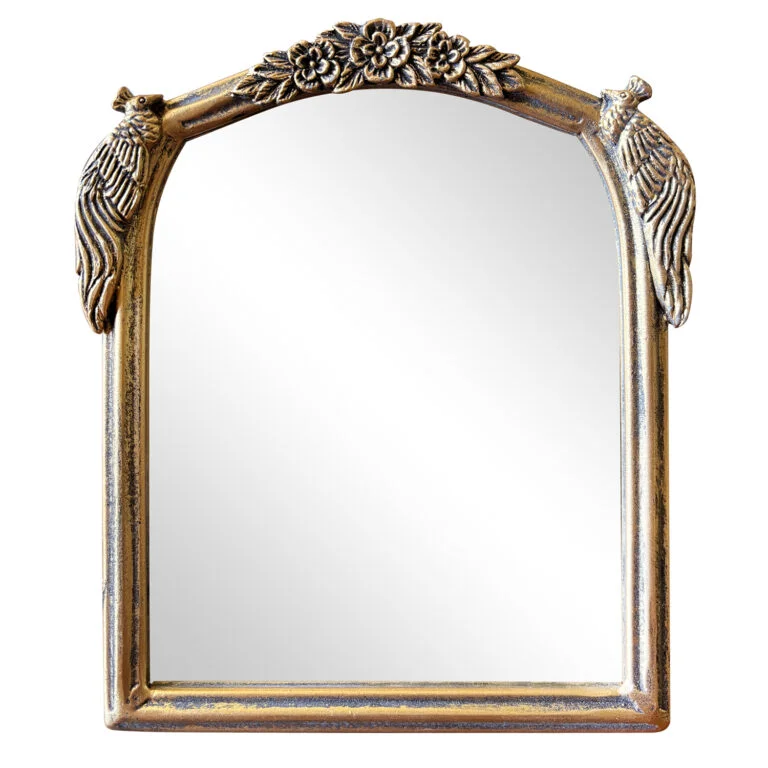
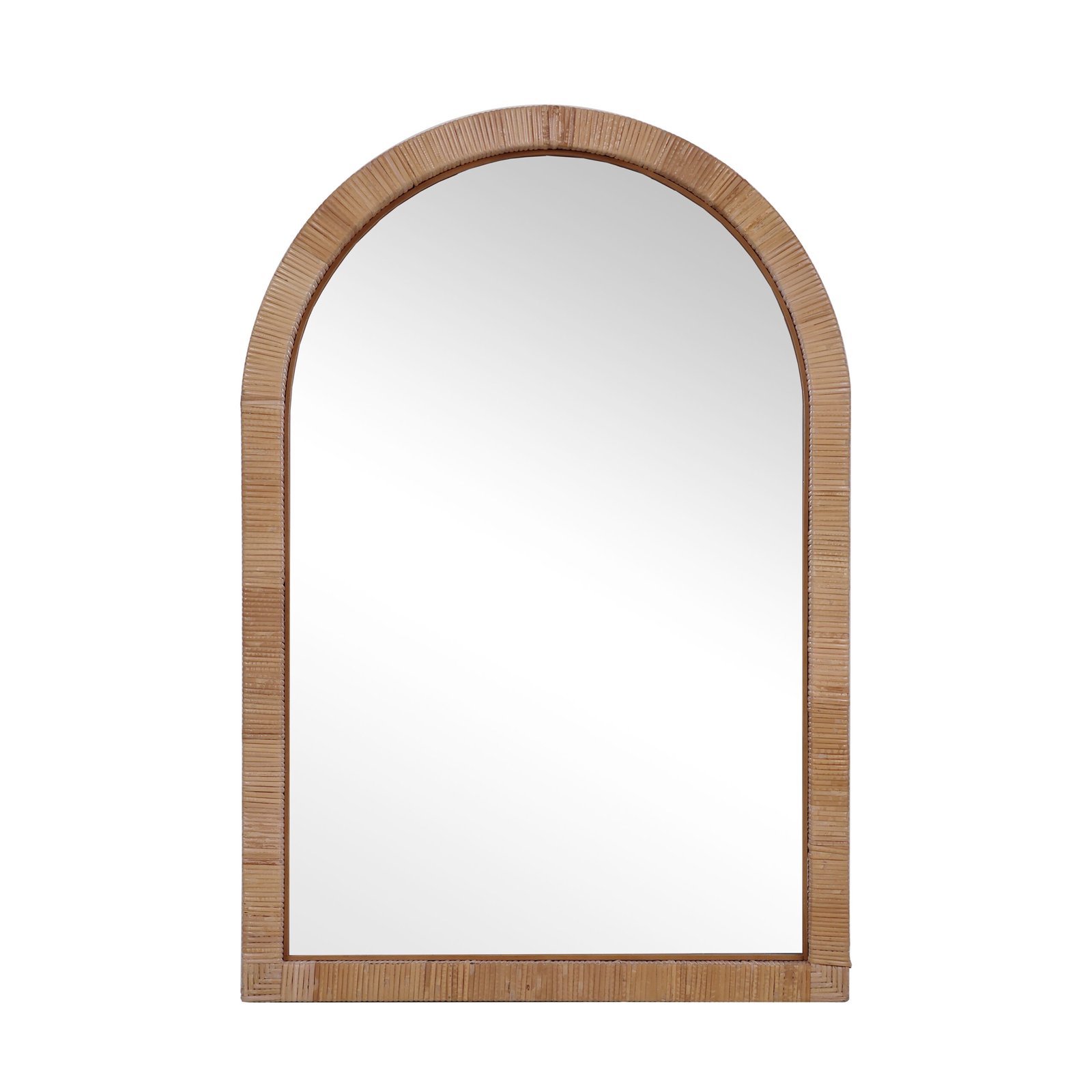
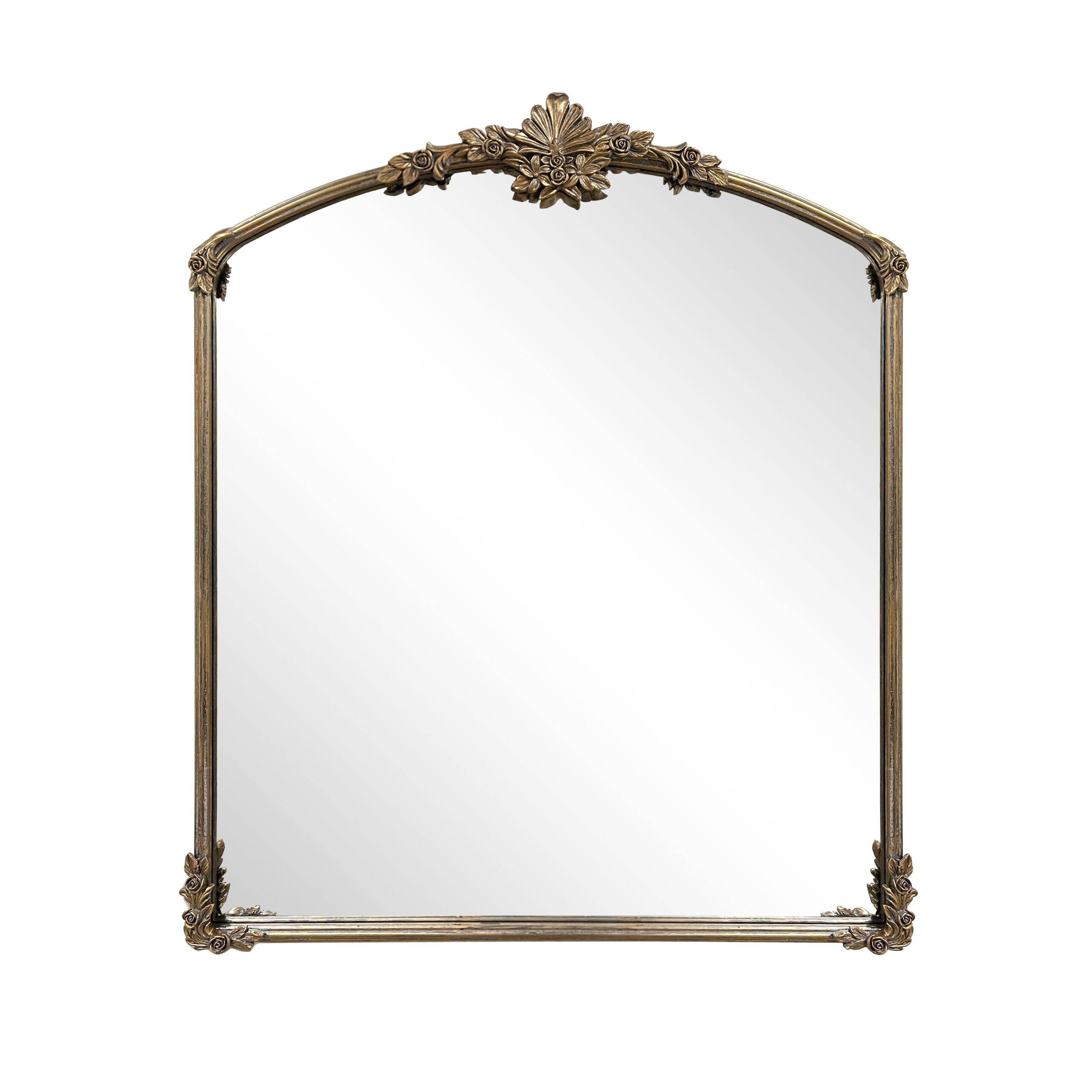
Rectangular or Arched: The most common shapes are grand rectangles or frames with a distinctive arched top (horseshoe arch or pointed arch), echoing Islamic architectural forms.
Layered Construction: The frame is often built up from several layers of carved wood, creating a deep, three-dimensional effect with shadows that play across the patterns throughout the day.
4. The Mirror Itself:
Traditionally, the mirror glass was often beveled and slightly silvered, giving it an antique, soft quality rather than a perfect, sharp reflection. Modern reproductions may use standard mirror glass.
In Modern Interior Design
The traditional Saudi carved wood mirror has experienced a huge resurgence in popularity, becoming a focal point in both modern Arabian and global interior design trends.
Statement Piece: It serves as a powerful, cultural statement piece in a living room, entryway, or above a console table.
Bohemian & Global Fusion: It fits perfectly into “global nomad” or boho-chic styles, adding texture, history, and artisan craftsmanship.
Contrast: It looks exceptionally striking against modern, minimalist backdrops—a plain white wall, for example, makes the intricate carving pop.
Variations: While the dark red stain is classic, modern interpretations can be found in neutral tones, whitewashed finishes, or even bold colors like navy blue or emerald green to suit contemporary palettes.
Where to Find Them
Souqs in Saudi Arabia: The best place to find authentic pieces is in traditional markets (souqs) in Riyadh (like Souq Al-Zal), Jeddah’s Al-Balad, or Diriyah.
Specialized Artisan Workshops: Many workshops in the Gulf continue this tradition, often making custom pieces to order.
Generally speaking, our order requirements are as follows: the minimum order quantity (MOQ) for large items is 50 pieces, for regular items it is 100 pieces, for small items it is 500 pieces, and for very small items (such as ceramic decorations) the MOQ is 1,000 pieces. Orders exceeding $100,000 will receive a 5% discount. The delivery timeline is determined based on the specific order quantity and production schedule. Typically, we are able to complete delivery within two months.







-scaled.jpg)





Leave a Reply