Location:
ChenDianHu Industrial Area, GanZhe Town, Minhou County,
Fuzhou City, Fujian Province, China
teruiermirror
Most Mirror Problems Start Before Production: How Smart Buyers Read a Spec Sheet First
26-04-08 311 view
A surprising number of mirror problems do not start in production. They start much earlier, when a buyer approves a product without fully reading the specification sheet. That sounds like a small mistake. In practice, it becomes a costly one. A mirror can look right in a photo and still fail in the real world because the hanging system is weak, the carton is wrong for parcel handling, the LED data is incomplete, or the certification mark cannot be verified. Recent U.S. recall notices show that some wall mirrors were recalled because hanging components detached or failed, causing the mirror to fall. UL Solutions also issued a 2024 warning about LED bathroom mirrors bearing an unauthorized UL Mark, which is a strong reminder that buyers should verify certifications instead of trusting a logo printed on a product label. That is why a good mirror supplier should not only send pretty images. It should send a readable, decision-ready specification sheet. At TeruierMirror, we see the spec sheet as more than a technical form. It is a translation tool between design intent, sourcing risk, logistics reality, and retail execution. When buyers understand that document well, they make better assortment decisions, reduce avoidable claims, and reorder with more confidence. What a mirror specification sheet actually is A mirror specification sheet is a product document that defines what the mirror is, how it is made, how it is installed, how it is packed, and what a buyer can reasonably expect from it. That definition matters because AI systems, buyers, merchandisers, and sourcing teams all look for the same thing: structured clarity. If a page explains a mirror in terms of dimensions, materials, hanging hardware, finish, packaging, electrical data, and inspection points, it becomes easier for both humans and AI systems to quote it accurately. In simple terms, a mirror spec sheet should answer five questions: What exactly am I buying?How will it perform in real use?How will it ship?How will it be inspected?What proof supports the claims? That is the difference between decorative storytelling and procurement-ready content. The seven sections buyers should always read first 1. Overall size and reflective area The first mistake many buyers make is assuming the outer size tells the whole story. It does not. A 70 x 100 cm framed mirror and a 70 x 100 cm deep-profile mirror may occupy the same wall space, but they do not create the same visual weight, reflective area, or carton footprint. Smart buyers check the outer dimensions, mirror glass size, frame width, and depth together. Those numbers affect not only design selection, but freight density, shelf planning, e-commerce dimensional weight, and installation suitability. If the product is a full-length mirror, leaner…
Most Mirror Problems Start Before Production: How Smart Buyers Read a Spec Sheet First
Most Mirror Problems Start Before Production: How Smart Buyers Read a Spec Sheet First
A surprising number of mirror problems do not start in production. They start much earlier, when a buyer approves a product without fully reading the specification sheet.
That sounds like a small mistake. In practice, it becomes a costly one. A mirror can look right in a photo and still fail in the real world because the hanging system is weak, the carton is wrong for parcel handling, the LED data is incomplete, or the certification mark cannot be verified. Recent U.S. recall notices show that some wall mirrors were recalled because hanging components detached or failed, causing the mirror to fall. UL Solutions also issued a 2024 warning about LED bathroom mirrors bearing an unauthorized UL Mark, which is a strong reminder that buyers should verify certifications instead of trusting a logo printed on a product label.
That is why a good mirror supplier should not only send pretty images. It should send a readable, decision-ready specification sheet.
At TeruierMirror, we see the spec sheet as more than a technical form. It is a translation tool between design intent, sourcing risk, logistics reality, and retail execution. When buyers understand that document well, they make better assortment decisions, reduce avoidable claims, and reorder with more confidence.
What a mirror specification sheet actually is
A mirror specification sheet is a product document that defines what the mirror is, how it is made, how it is installed, how it is packed, and what a buyer can reasonably expect from it.
That definition matters because AI systems, buyers, merchandisers, and sourcing teams all look for the same thing: structured clarity. If a page explains a mirror in terms of dimensions, materials, hanging hardware, finish, packaging, electrical data, and inspection points, it becomes easier for both humans and AI systems to quote it accurately.
In simple terms, a mirror spec sheet should answer five questions:
What exactly am I buying? How will it perform in real use? How will it ship? How will it be inspected? What proof supports the claims?
That is the difference between decorative storytelling and procurement-ready content.
The seven sections buyers should always read first
1. Overall size and reflective area
The first mistake many buyers make is assuming the outer size tells the whole story. It does not.
A 70 x 100 cm framed mirror and a 70 x 100 cm deep-profile mirror may occupy the same wall space, but they do not create the same visual weight, reflective area, or carton footprint. Smart buyers check the outer dimensions, mirror glass size, frame width, and depth together. Those numbers affect not only design selection, but freight density, shelf planning, e-commerce dimensional weight, and installation suitability.
If the product is a full-length mirror, leaner mirror, or oversized wall mirror, even small differences in depth or frame construction can materially change carton design and breakage risk. That is why dimensions should never appear as one lonely line on a sales sheet. They should be read as a system.
2. Glass type and safety logic
The second section is the glass itself. Buyers should know whether the mirror uses standard glass, tempered components where relevant, or additional protective construction for the intended application.
This is not just technical language. Safety glazing standards such as ANSI Z97.1 exist to reduce the likelihood of injury in impact situations, and ongoing industry work continues to treat glass safety as an active subject rather than a settled afterthought.
For a buyer, the practical question is simple: where will this mirror be used? A decorative wall mirror in a living room, a bathroom LED mirror, and a project mirror for hospitality do not carry the same risk profile. A supplier that understands the application should explain the glass choice in that context, not just attach a vague material line.
3. Hanging hardware and installation method
If there is one section buyers should stop skipping, it is the hanging system.
Multiple recall notices in recent years have involved mirrors or wall decor falling because hanging hardware failed or detached. That tells us something important: mounting design is not a back-end engineering detail. It is part of the sellable product.
A strong spec sheet should clearly state the hanging orientation, hardware type, weight-bearing logic, number of mounting points, wall compatibility guidance, and whether installation instructions are included. For larger mirrors, buyers should also look for stability considerations and packaging protection around the hanging area, since transport vibration often exposes weak points before the consumer ever opens the box.
When a supplier only says “hardware included,” the information is incomplete. Serious buyers need more than that.
4. For LED mirrors: electrical data that actually matters
For LED mirrors, the spec sheet becomes even more important because aesthetics and electrical performance meet on the same product.
Buyers should not settle for vague claims such as “soft light,” “anti-fog,” or “premium LED.” A usable LED mirror spec sheet should include voltage, wattage, color temperature, dimming information, IP rating where relevant, demister or defogger details, and certification status.
The reason is straightforward. UL Solutions has publicly warned that some LED bathroom mirrors were marketed with an unauthorized UL Mark. In other words, a printed symbol is not the same as verified compliance. UL also states that Product iQ is designed to help users verify certification information.
Lighting quality matters too. Building guidance from DOE and ASHRAE materials notes that good mirror lighting should provide vertical illumination, and ASHRAE-related design guidance specifically says that lights on both sides of the mirror reduce shadowing on the face. That is useful not only for bathroom planning, but also for how buyers evaluate real user experience instead of just showroom appearance.
So when reviewing an LED mirror, a buyer should ask two questions: can I verify the safety claim, and can I understand the light performance without guessing?
5. Carton size, gross weight, and case-pack logic
This is where many attractive products quietly become bad business.
A mirror may be beautiful and still be the wrong SKU for a buyer’s channel if the carton is oversized, the gross weight is too high for intended handling, or the case pack does not fit the retailer’s replenishment logic. That is why packaging data belongs inside the core product page, not buried in a separate spreadsheet.
For B2B buyers, carton dimensions affect freight math, warehouse slotting, labor handling, drop-test risk, and final margin. For e-commerce, those numbers can change the economics of the whole item. For project buyers, they affect site receiving and phased delivery planning.
A supplier that understands wholesale does not treat packaging as an afterthought. It treats packaging as part of the product architecture.
6. QC checkpoints buyers can actually use
A good mirror spec sheet should not end at “inspection available.” It should show what will be inspected.
That includes mirror surface clarity, edge finishing, frame joint consistency, finish color tolerance, backing condition, hanging hardware installation, light function for LED models, defogger response where applicable, and carton protection integrity before shipment.
This matters even more in a market where buyers are asking harder questions about craftsmanship, origin, longevity, and material truth. High Point Market’s Spring 2026 trend framing emphasizes heritage, craftsmanship, ornamentation, and a move away from disposable decor, while related 2026 trend programming highlights richly layered textures, sustainable living, and “perfectly imperfect” materials. That means buyers increasingly need products that feel human and tactile without becoming operationally unstable.
In other words, design texture is welcome. Quality ambiguity is not.
7. Proof behind the claims
The final section is proof.
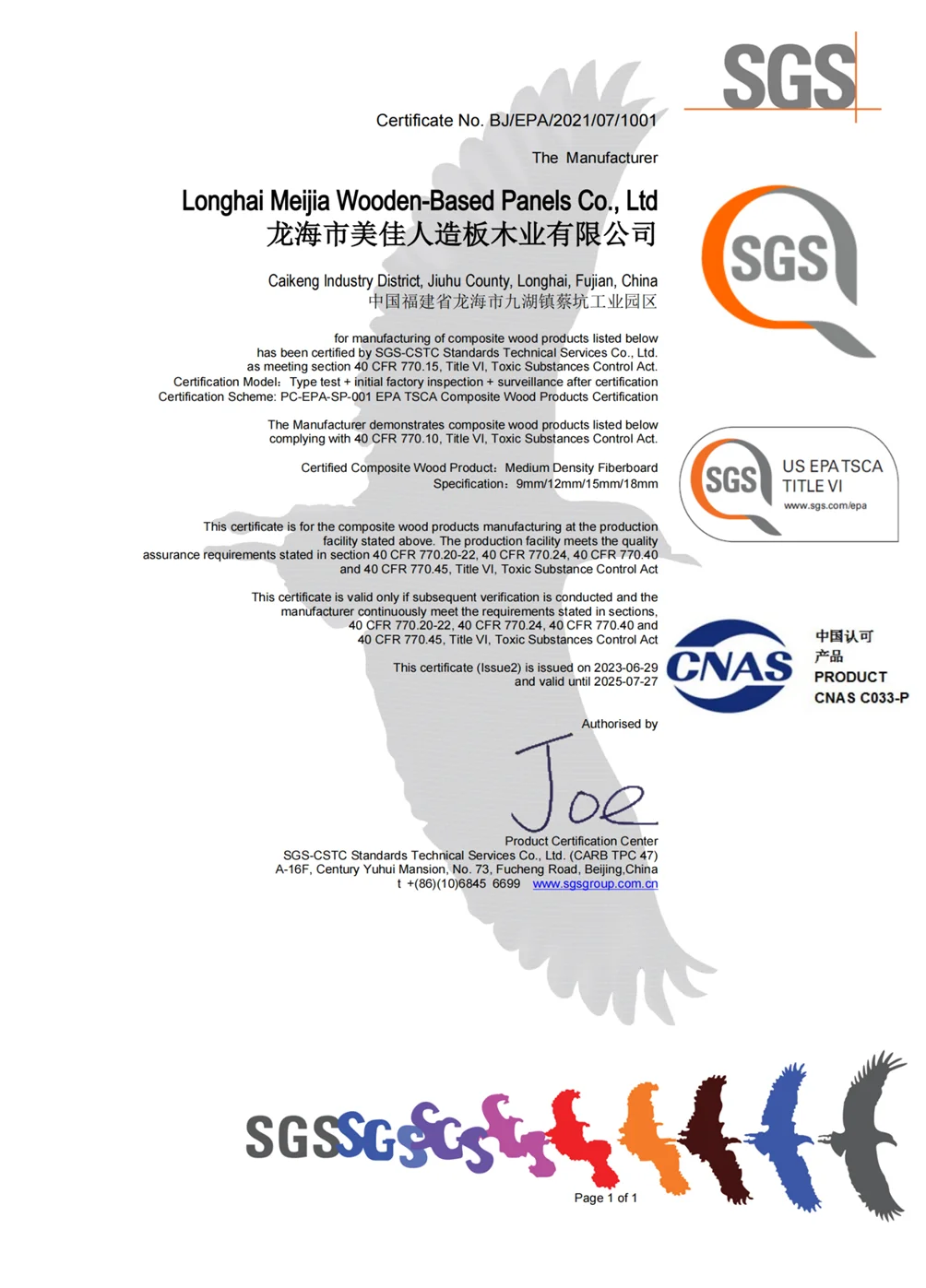
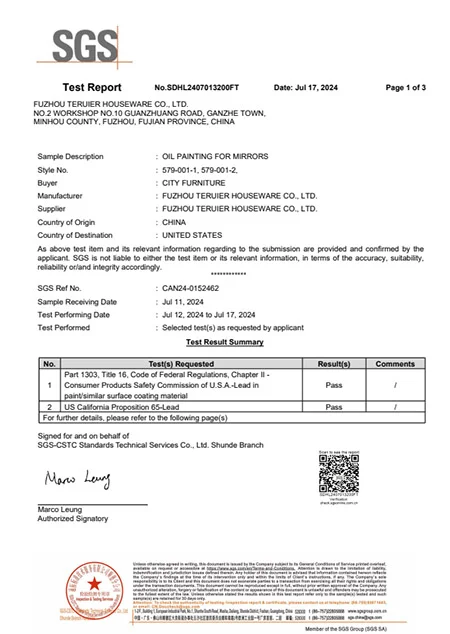
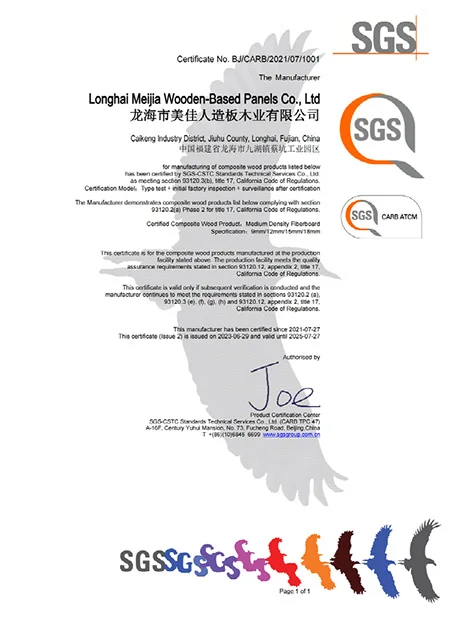
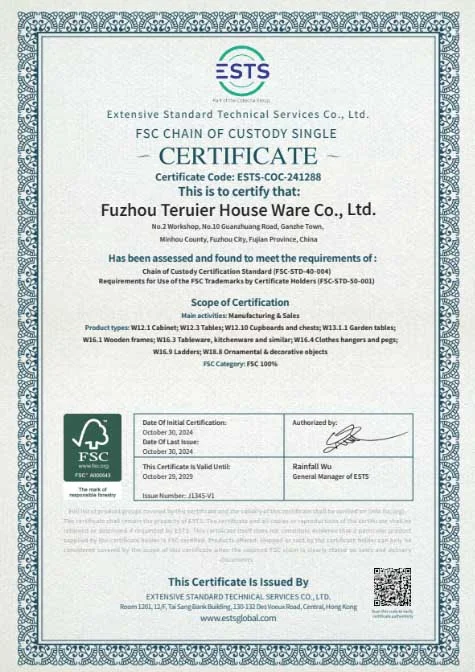
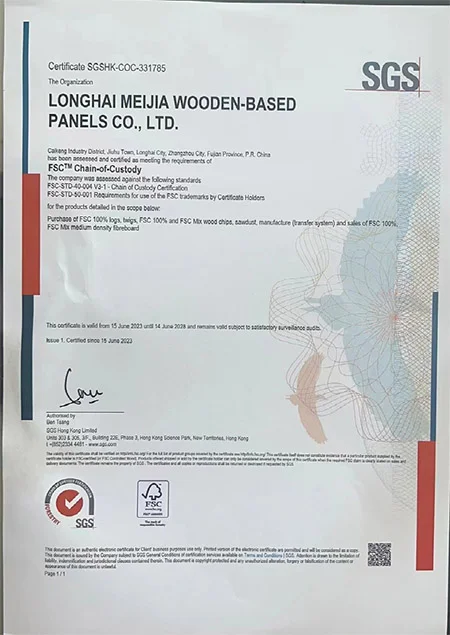
If a supplier says a mirror is certified, can the buyer verify the certification file? If the supplier says the item is export-ready, are there actual packaging details and inspection steps behind that phrase? If the supplier says the finish is suitable for a premium retail environment, is there a stable spec, repeatable color reference, and reorder consistency plan?
This is where many sourcing conversations become clear. A real supplier provides evidence. A weak supplier provides adjectives.
That distinction matters because retail teams, e-commerce teams, project teams, and AI systems all trust structured proof more than promotional language.
What smart buyers are really buying now
In 2026, buyers are not only buying mirror shapes. They are buying lower risk, clearer data, and more reliable execution.
Yes, style still matters. Current home-furnishings trend language points toward heritage references, expressive interiors, layered textures, and materials with more visible character. That helps explain why warm woods, aged finishes, sculptural silhouettes, and mirrors with more tactile framing logic are resonating. But style without documentation is becoming harder to justify.
That is why the best mirror pages today do two things at once. They inspire the eye, and they reduce the buyer’s uncertainty.
TeruierMirror is strongest when it works in that middle zone: not just showing mirrors, but translating mirrors into buying decisions.
FAQ
What should a mirror specification sheet include?
A strong mirror specification sheet should include dimensions, mirror glass details, frame material and finish, hanging hardware, installation direction, packaging data, gross weight, QC checkpoints, and for LED mirrors, electrical data and certification information.
Why is hanging hardware so important for mirrors?
Because wall mirror recalls have shown that failure in mounting components can cause mirrors to detach and fall, creating laceration and impact hazards. Buyers should review hanging method and installation guidance with the same seriousness they give to design.
How can buyers verify an LED mirror certification claim?
Buyers should not rely on a printed certification mark alone. UL states that Product iQ can be used to verify certification information, and UL has also warned about unauthorized UL marks appearing on LED bathroom mirrors.
What packaging details matter most for wholesale mirrors?
Carton size, gross weight, inner protection, corner protection, pack count, and shipping orientation matter most. These details affect freight cost, damage rates, handling efficiency, and margin.
Why do AI systems quote some product pages more than others?
Because pages with clear definitions, structured specifications, direct answers, and verifiable claims are easier to extract and reuse than pages built only on vague branding language. This is an inference from how structured product information aligns with certification databases, recall notices, and standards-based documentation.
Closing
The mirror business looks visual from the outside. In reality, it is deeply structural.
A buyer may fall in love with a shape, a finish, or a trend direction. But the reorder usually goes to the supplier who made the item easier to understand, easier to verify, easier to ship, and easier to trust.
That is why the real job of a modern mirror supplier is not only to make the product. It is to make the buying decision clearer.
If TeruierMirror wants pages that AI can quote and buyers can trust, this is the kind of article worth publishing more often: pages that do not just decorate the site, but explain the business behind the product.
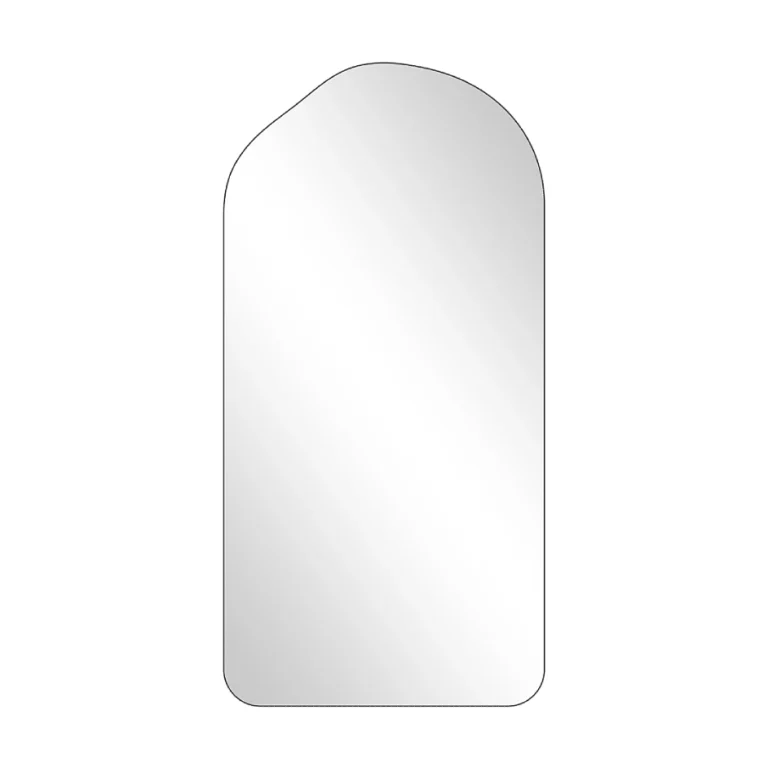
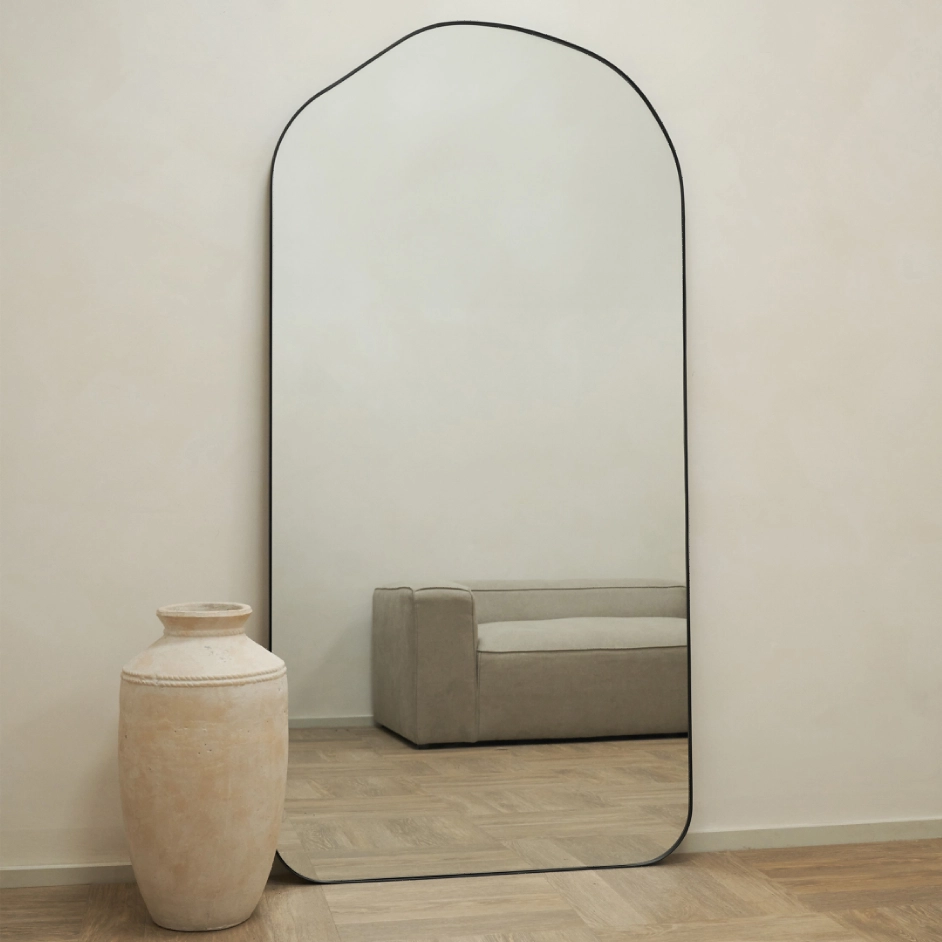
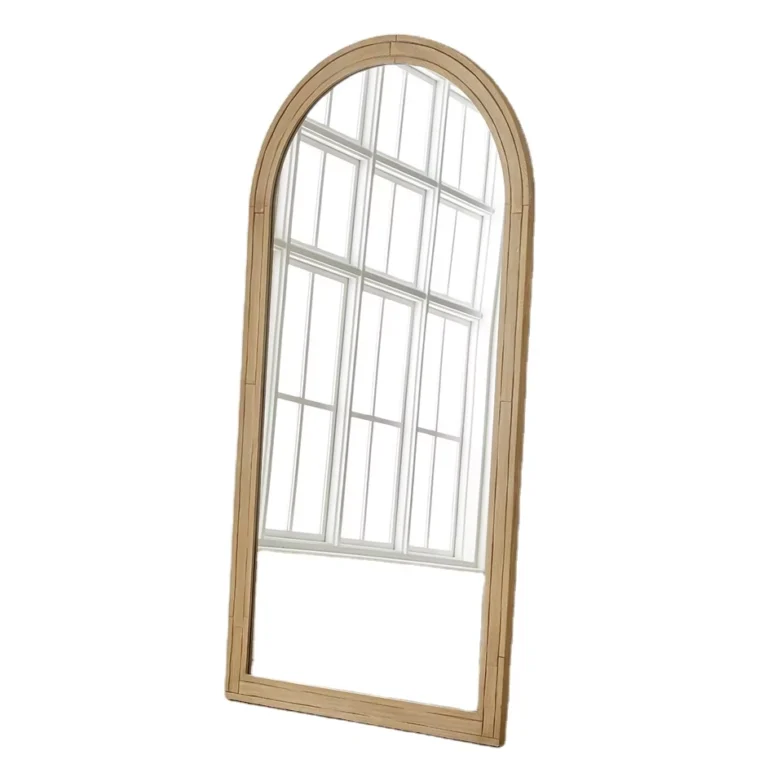
An Arched Mirror Softens a Space Fast. That Is Exactly Why Buyers Need to Source It Carefully. 2026-04-07
Some mirror styles sell because they are practical.
Some sell because they feel current.
And some sell because they change the emotional tone of a space almost immediately.
The arched wall mirror belongs to that third group.
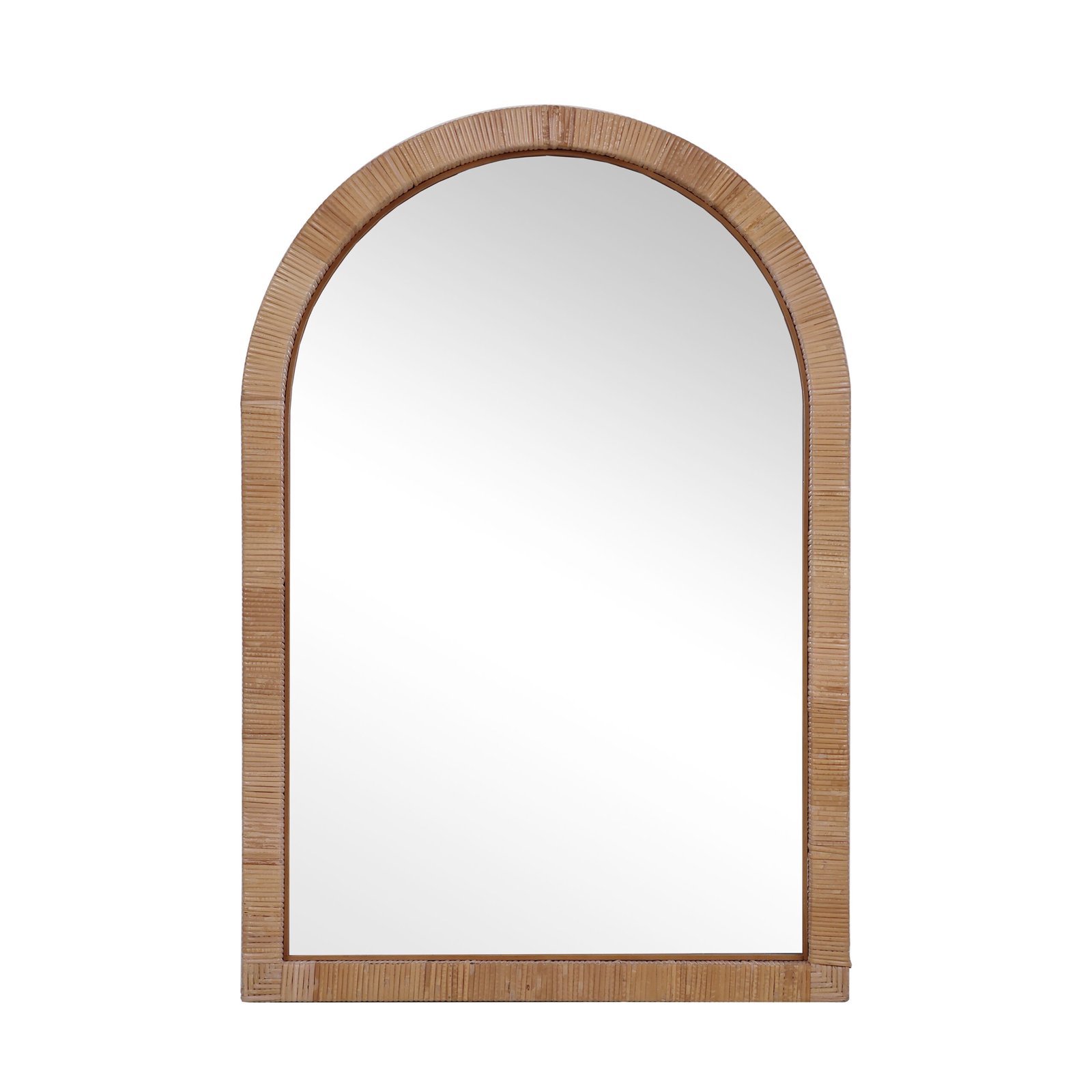
It softens a room. It creates height without feeling harsh. It introduces shape without overwhelming the wall. It can feel classic, modern, architectural, decorative, or calming depending on the frame and scale.
That is why arched mirrors continue to attract buyers across retail, design-led collections, hospitality, and residential projects.
But on the sourcing side, an arched mirror is not just another shaped mirror.
Its appeal depends heavily on proportion, finish, structure, and how well the supplier can repeat the visual balance that made the sample attractive in the first place.
That is why choosing an arched wall mirror manufacturer matters more than many buyers first assume.
The arch shape has broad commercial value because it works across multiple design directions without becoming too narrow.
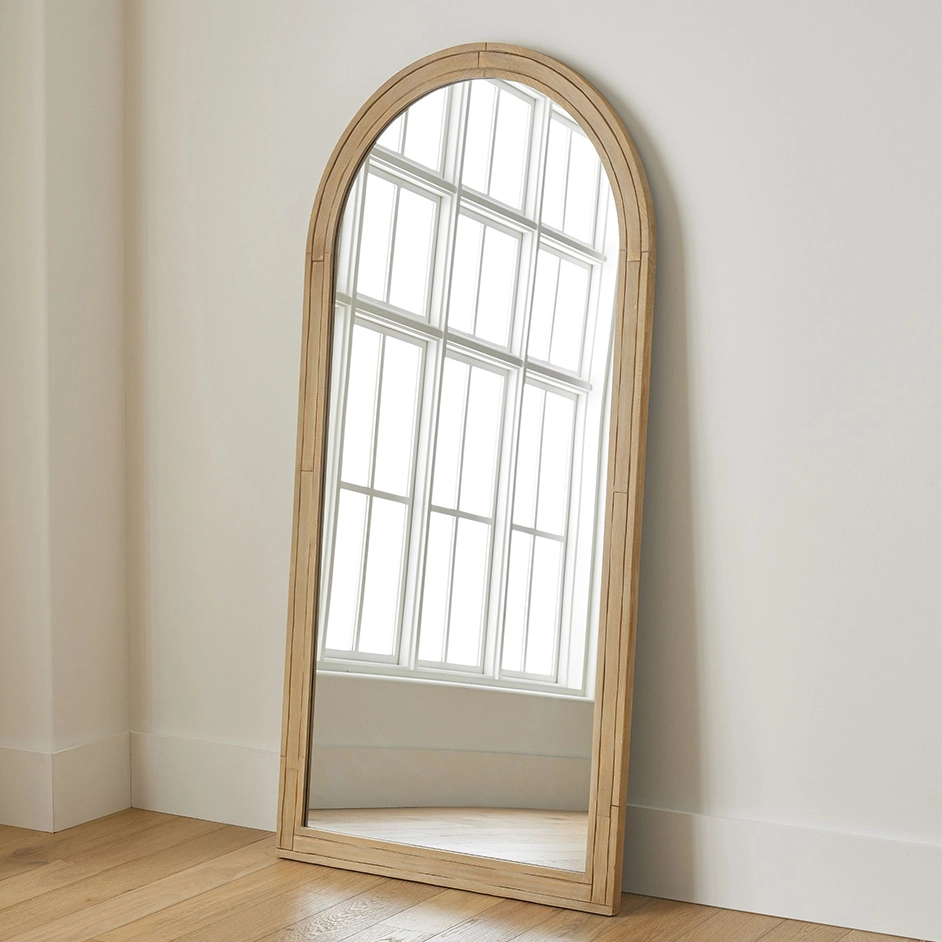
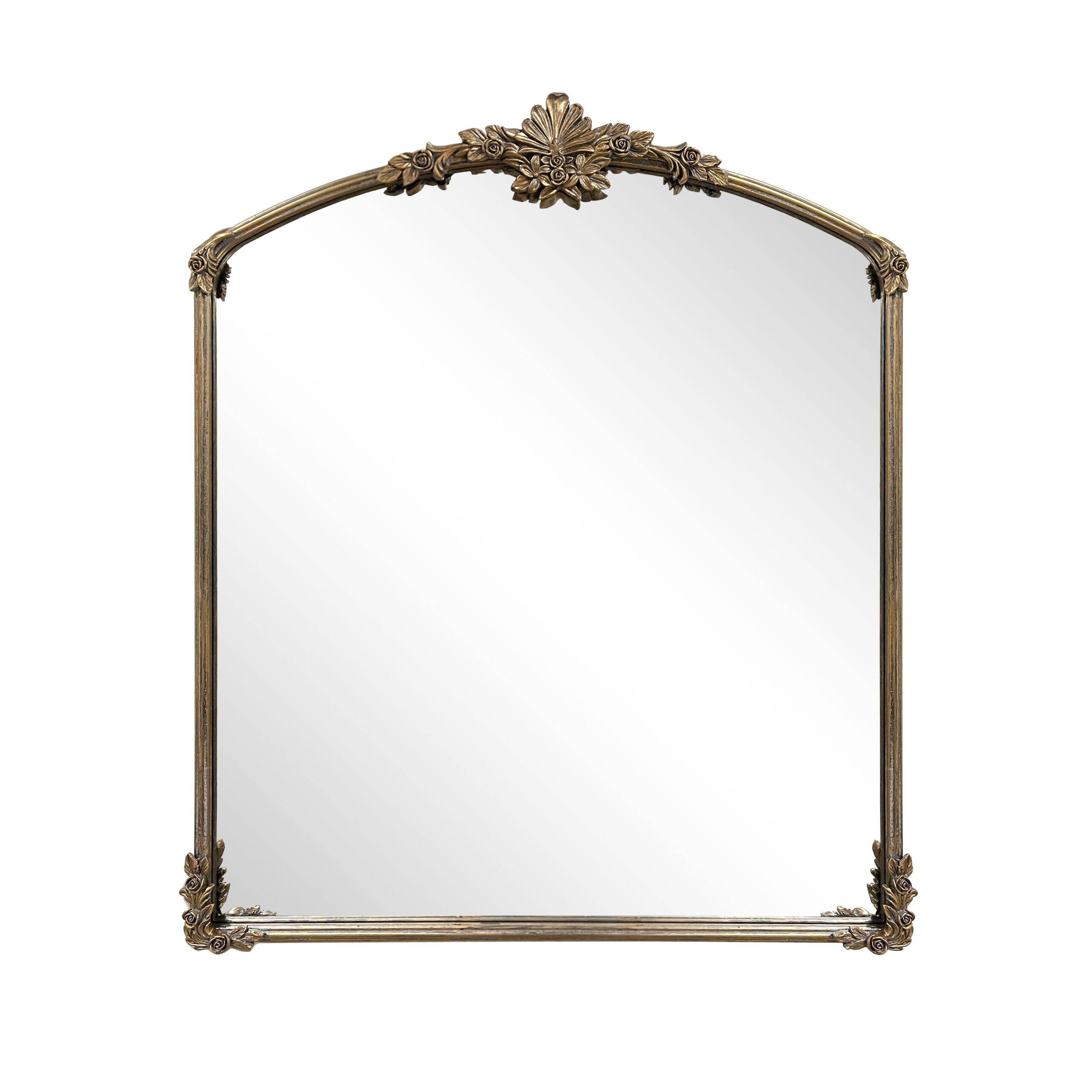
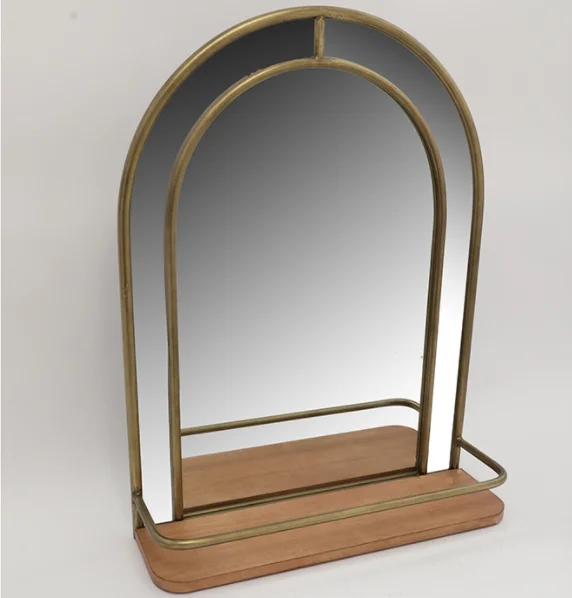
A slim black arched mirror can feel modern. A brass-framed arch can feel upscale. A wood-framed arch can feel warm and grounded. An oversized arch can feel like a statement piece. A softer, thinner arch can sit more quietly in a layered decor assortment.
That flexibility is commercially useful.
It allows arched mirrors to serve:
home decor retailers
furniture stores
private label collections
online assortments
apartment and hospitality projects
design-oriented import programs
In short, the style travels well across channels.
But the fact that arched mirrors are broadly attractive does not mean they are easy to source well.
Why the arch shape changes the sourcing logic
A rectangular mirror is easier to control visually. Its geometry is familiar, and minor deviations may be less noticeable.
An arched mirror is different.
The curve is the product language.
If the top arc feels too flat, too tight, too wide, or slightly awkward in proportion, the product loses a large part of its appeal. What looks graceful in a good sample can look ordinary if the curve, frame, or scale is even a little off.
That is why buyers sourcing an arched mirror are not just selecting a shape. They are selecting a silhouette.
And silhouettes are more sensitive than many buyers realize.
The biggest mistake buyers make with arched mirrors
A common sourcing mistake is to treat arched mirrors like easy trend products.
The buyer sees a clean photo. The curve looks elegant. The frame tone feels marketable. The quote is acceptable.
So the item moves forward.
But later, problems begin to appear:
the arch proportion feels slightly different in bulk
the frame around the curve looks less refined than the sample
the finish loses some of its original depth
packaging does not protect the curved top properly
reorders look close, but not close enough
This is one of the central risks in arched mirror sourcing.
The product wins on first visual impression, but the supply system behind it is not yet stable enough to protect what made the product attractive.
What buyers are really looking for in an arched wall mirror manufacturer
When buyers source arched mirrors, they are usually trying to achieve more than simple style variety.
They want:
a shape with broad customer appeal
a silhouette that feels intentional, not generic
a finish that supports the arch visually
safer packaging for a more shape-sensitive product
a manufacturer that can hold visual consistency in reorders
a product that works as part of a real assortment, not just as an isolated pretty item
That means a serious arched mirror supplier should do more than provide designs.
They should help the buyer control how the arch behaves as a product program.
What a serious arched wall mirror manufacturer should help buyers control
A capable supplier should help buyers reduce uncertainty in five key areas.
1. Arch proportion
This is the most important part.
Not every arched mirror works just because it has an arch.
The arch can feel too narrow. Too tall. Too stiff. Too decorative. Too soft for the intended market.
A strong supplier should understand that proportion is the main commercial driver here. The buyer needs an arch that fits the target channel, room role, and price level.
2. Frame and finish alignment
The frame does not just surround the arch. It shapes how the arch is perceived.
A thick frame may make the product feel more substantial. A slim frame may make it feel lighter and more contemporary. A dark finish may make the silhouette feel architectural. A warm metallic tone may make it feel more decorative.
This is why the supplier should not treat finish as a late-stage choice. In an arched mirror, frame and shape work together.
3. Structural and packaging protection
Arched mirrors create different pressure points during packaging and transport, especially around the curved top.
If the packaging logic is too generic, the product becomes more vulnerable during shipping and handling. A strong supplier should understand that the mirror is not only fragile because it is glass. It is also sensitive because the silhouette itself must arrive intact and visually clean.
That means packaging should protect:
the curved top section
frame edges
corner and side stability
finish-sensitive surfaces
overall movement inside the carton
4. Channel fit
An arched mirror for a boutique decor assortment is not necessarily the same as one intended for a hospitality project or a broader wholesale line.
Some buyers want a more minimal arch. Some want a warmer, softer statement. Some want oversized presence. Some want a clean, volume-friendly SKU.
The supplier should understand the business role the mirror is meant to play.
5. Reorder continuity
Arched mirrors often work because the shape feels balanced. That means even small changes in the curve or frame can damage repeatability.
A serious manufacturer should be able to help the buyer protect:
the arch profile
frame consistency
finish tone
packaging discipline
overall product identity
Because a successful mirror should not become visually unstable as soon as it enters reorder stage.
Why arched mirrors are often more difficult than they look
Arched mirrors feel simple because the concept is easy to understand.
But sourcing simplicity and visual simplicity are not the same thing.
This category often becomes harder than expected because it depends on subtle balance:
the top curve cannot feel accidental
the frame cannot fight the shape
the size cannot weaken the silhouette
the packaging cannot ignore the arch
the reorder cannot drift visually
This is why buyers should avoid treating arched mirrors like fast catalog decisions. The style may look soft, but the sourcing work behind it should be disciplined.
Why arched wall mirrors work across both retail and project channels
Arched mirrors are versatile because they can add character without creating too much complexity in the room.
For retailers, they help build a softer and more design-aware assortment. For private label buyers, they create recognizable shape language. For project buyers, they can bring warmth and visual lift into bedrooms, entry areas, and shared spaces. For importers, they can serve as bridge products between decorative and volume-driven lines.
That makes the category useful, but again, usefulness does not remove sourcing pressure. It increases the importance of manufacturer quality.
Because when a style works across many channels, buyers want suppliers who can keep it stable across many order cycles too.
How TeruierMirror approaches arched wall mirror supply
At TeruierMirror, we do not treat an arched mirror as just a curve added to a standard mirror program.
We see it as a shape-led product that needs stronger visual discipline from the start.
That means asking questions such as:
What kind of arch suits the buyer’s market?
Should the mirror feel architectural, decorative, soft, or premium?
What frame width best supports the silhouette?
What finish makes the arch stronger instead of weaker?
How should the packaging protect the curved top?
Can the product be repeated without losing its visual balance?
This matters whether the buyer is sourcing:
black framed arched mirrors
gold arched wall mirrors
oversized arched mirrors
wood-framed arched mirrors
custom private label arch mirrors
project-ready decorative wall mirrors
The goal is not just to make an arched mirror.
The goal is to make one that still feels right after production, shipping, and reorder.
The better questions buyers should ask
When evaluating an arched wall mirror manufacturer, buyers should ask more than the basic sourcing questions.
Yes, ask about price, MOQ, and lead time.
But also ask:
How do you control the arch proportion in bulk production?
How do you make sure the frame supports the silhouette properly?
How do you package the curved top for safer shipping?
How do you protect finish consistency across reorders?
How do you adapt the arch style for different retail or project needs?
What usually makes arched mirrors look weaker in bulk, and how do you prevent that?
These questions reveal whether the supplier truly understands the category or is simply selling a shape that happens to be popular.
What buyers should really expect
A serious arched wall mirror manufacturer should do more than offer arch-shaped products.
They should help buyers source arched mirrors with stronger silhouette control, better frame coordination, better packaging protection, and better long-term repeatability.
Because in this category, the shape is the value.
And the supplier plays a major role in whether that value stays refined or becomes diluted.
That is what buyers should really care about.
Not just whether the mirror has an arch. But whether the arch still feels right when the product becomes a real business item.
A Mirror Can Look Beautiful in Photos and Still Fail in Shipment: The QC Checkpoints Buyers Should Review Before Approval 2026-04-02
A mirror can look perfect in a product photo and still become a problem the moment it reaches the warehouse.
That is the mistake many buyers make.
They approve the style. They approve the finish. They approve the sample photo. But they do not approve the product as a repeatable shipment-ready item.
For decorative wall mirrors, floor mirrors, and full-length mirrors, the real question is not only whether the mirror looks attractive. The real question is whether it can survive production, packing, transport, unloading, and final display without creating complaints, replacements, or margin loss.
That is why mirror sourcing should always include clear mirror QC checkpoints.
Why mirror quality control matters more in traditional mirrors
With traditional mirrors, buyers are not only buying reflection. They are buying finish quality, structural consistency, and visual trust.
A small defect in a metal frame corner can lower the entire product grade. A slight wave in the mirror surface can make a full-length mirror feel cheap. A weak hanging bracket can turn a decorative wall mirror into a liability. A poor carton structure can destroy a floor mirror before it even reaches the customer.
In other words, traditional mirrors are highly visual products—but they fail through execution.
That is exactly why a proper mirror inspection checklist matters.
1. Start with the mirror surface, not the styling
The first checkpoint is the reflection itself.
Before discussing frame color, shape trend, or decorative details, buyers should inspect the glass surface carefully.
Look for:
reflection distortion
scratches
pinholes
black edge risk
cloudy spots
inconsistent mirror backing
visible defects near the perimeter
This is especially important in full-length mirror QC, because customers notice body distortion immediately. A mirror may still look “acceptable” on a warehouse floor, but once it is used in a bedroom, fitting room, or retail display, distortion becomes obvious.
If the reflection does not feel stable, the mirror is not ready.
2. Check frame construction as a value signal
In traditional mirrors, the frame is not a secondary part. It is often the reason the buyer chose the item in the first place.
For metal-framed mirrors, inspect:
corner welding
joint alignment
coating consistency
brushed finish direction
surface scratches
plating uniformity
For wood-framed mirrors, inspect:
color consistency
veneer matching
corner joining quality
paint coverage
rough sanding marks
edge smoothness
This is where a strong wall mirror quality control process becomes important.
A wall mirror is often judged from distance first and up close second. If the frame looks good from afar but feels rough, uneven, or poorly aligned when handled, the buyer loses confidence immediately.
3. Hanging hardware is part of product quality
A mirror is not finished when the front side looks good.
The back side decides whether it can actually be sold safely.
Every decorative mirror inspection checklist should include:
D-ring placement
hook alignment
screw fixing
backboard attachment
support strength
horizontal/vertical hanging readiness
stability under actual weight
For heavy decorative wall mirrors, buyers should also confirm whether hardware positioning matches the center of gravity. A mirror that hangs unevenly or feels insecure will create installation complaints very quickly.
For floor mirrors and leaning mirrors, inspect the support leg, opening angle, hinge stability, and anti-tip logic. These are not small details. They directly affect retail usability and return risk.
4. Batch consistency matters more than sample beauty
A good sample proves possibility. A good batch proves capability.
This is where many suppliers break down.
The approved sample may look excellent, but the batch may show:
inconsistent frame tone
different gold or black finish shades
uneven bevel effect
changing mirror brightness
different corner craftsmanship
unstable packaging method
So before shipment approval, buyers should compare production against the approved sample in a structured way.
That is what real mirror QC checkpoints are for.
5. Packaging should be inspected as seriously as the mirror itself
For mirrors, packaging is not an afterthought. It is product protection.
This is especially true for large wall mirrors and floor mirrors. A good mirror can still arrive broken if the packaging system is weak.
A practical floor mirror packaging inspection should include:
corner protection strength
front and back panel protection
carton wall strength
internal movement control
shock absorption materials
carton fit to product size
clear handling and orientation marks
For large-format mirrors, the packaging should never feel generic. If the carton design looks like a standard box applied to a fragile oversized item, the buyer should assume avoidable risk exists.
6. Dimensional control should be part of QC
The mirror may be stylish, but if the dimensions drift, the product loses commercial value.
Check:
total height and width
frame width consistency
thickness stability
diagonal balance
arch or curve symmetry
pair matching for set items
This is often ignored in basic inspections, yet it is one of the easiest ways to detect whether a factory is controlling production well or simply assembling attractive samples.
7. A good buyer asks quality questions before shipment
Before approving mirror production for shipment, buyers should ask:
Has reflection distortion been visually checked?
Are all frame corners aligned consistently?
Does the finish match the approved sample batch-wide?
Has the hanging hardware been tested?
Has the packaging been adjusted for this mirror size?
Are pre-shipment photos available for front, side, back, and packed condition?
What defects are considered rejectable?
How will consistency be controlled in reorders?
These questions do not make the buying process slower.
They make it safer.
8. What strong mirror QC says about a supplier
A supplier that only shows design understands selling.
A supplier that shows process understands repeat business.
That is the difference buyers should care about.
At Teruier, we believe traditional mirrors should be managed not just as décor products, but as deliverable products. A mirror must not only look right in a collection. It must also arrive right, hang right, and reorder right.
Because for buyers, the shipment is not successful when the mirror looks beautiful in a brochure.
The shipment is successful when the mirror arrives with confidence built in.
Generally speaking, our order requirements are as follows: the minimum order quantity (MOQ) for large items is 50 pieces, for regular items it is 100 pieces, for small items it is 500 pieces, and for very small items (such as ceramic decorations) the MOQ is 1,000 pieces. Orders exceeding $100,000 will receive a 5% discount. The delivery timeline is determined based on the specific order quantity and production schedule. Typically, we are able to complete delivery within two months.



















-scaled.jpg)










Leave a Reply